
Latin for "God Enriches."
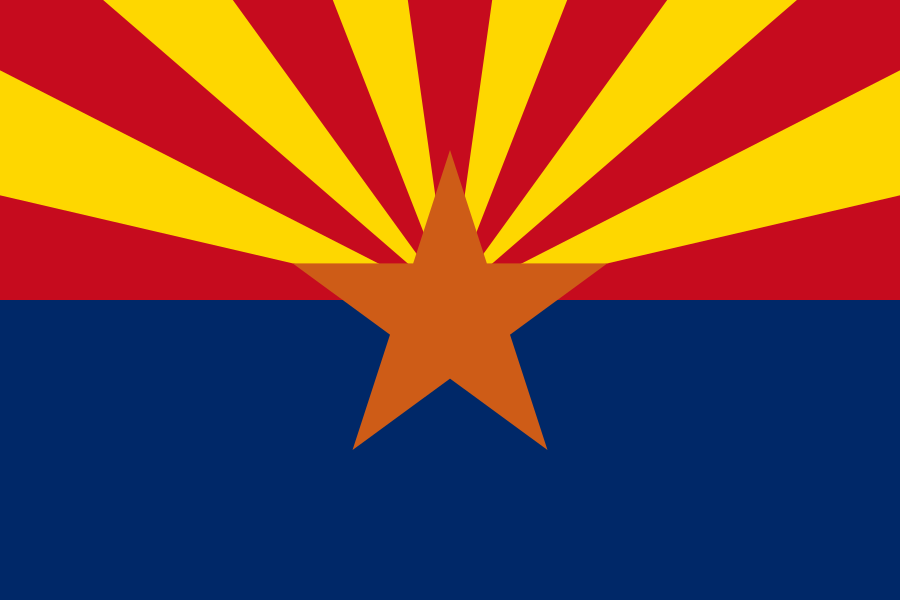
Adopted 1863/1912.
Arizona, the "Grand Canyon State," is a southwestern marvel celebrated for its extraordinary desert landscapes, vibrant cactus forests, and dramatic red rock formations. As one of the fastest-growing states in the nation, it combines a rich Native American and Hispanic heritage with a booming high-tech economy and world-class tourism.
Arizona officially joined the Union on February 14, 1912, as the 48th state, becoming the last of the contiguous 48 states to be admitted. Its history is a fascinating narrative of ancient indigenous civilizations, Spanish exploration, and a rapid 19th-century expansion fueled by the legendary quest for copper, silver, and gold.
Phoenix
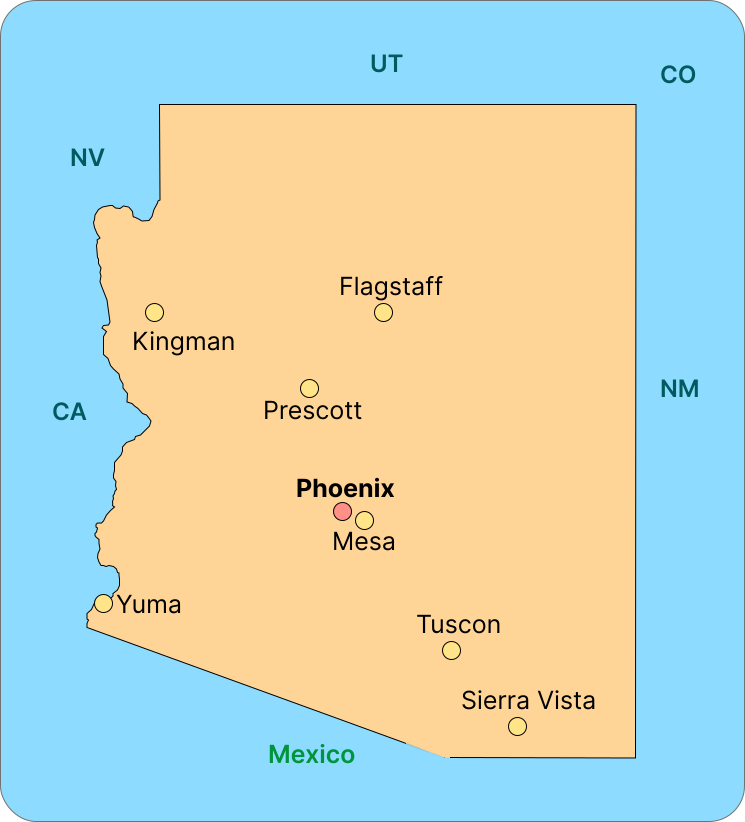
Population: ~1.65MThe state capital and one of the largest metropolitan areas in the country, serving as a massive hub for electronics manufacturing, financial services, and desert tourism.
Tucson
Population: ~550,000A historic city surrounded by five mountain ranges, home to the University of Arizona and renowned for its UNESCO-designated culinary scene and astronomy research.
Mesa
Population: ~510,000A thriving suburban hub east of Phoenix, known for its extensive park systems, cultural museums, and its role as a center for higher education and healthcare.
Chandler
Population: ~280,000Widely recognized as a leading technology corridor, it hosts major semiconductor and electronics plants, earning it a reputation as the "Silicon Desert."
Scottsdale
Population: ~250,000A world-famous destination for luxury resorts, championship golf courses, and high-end art galleries, set against the stunning backdrop of the Sonoran Desert.
Region: West
- Arizona is home to more Native American tribal land than any other state, with 22 federally recognized tribes.
- The state is so sunny that the sun shines for over 300 days a year in Yuma, making it the **sunniest place on Earth**.
- The Saguaro Cactus, an iconic symbol of the American West, can grow over 40 feet tall and live for more than 150 years.