Maine
The Pine Tree State
Quick Stats
Map
Seal & Motto
"Dirigo"
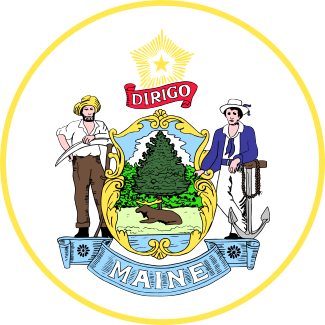
Latin for "I Lead," this motto was adopted in 1820 when Maine broke from Massachusetts to become the 23rd state as part of the Missouri Compromise. It embodies Maine's proud pioneer spirit and its role as the northernmost corner of New England — a guiding star for those who follow, standing firm against the cold Atlantic with the self-reliance and rugged independence that has always defined life on this storied coast.
Flag Meaning
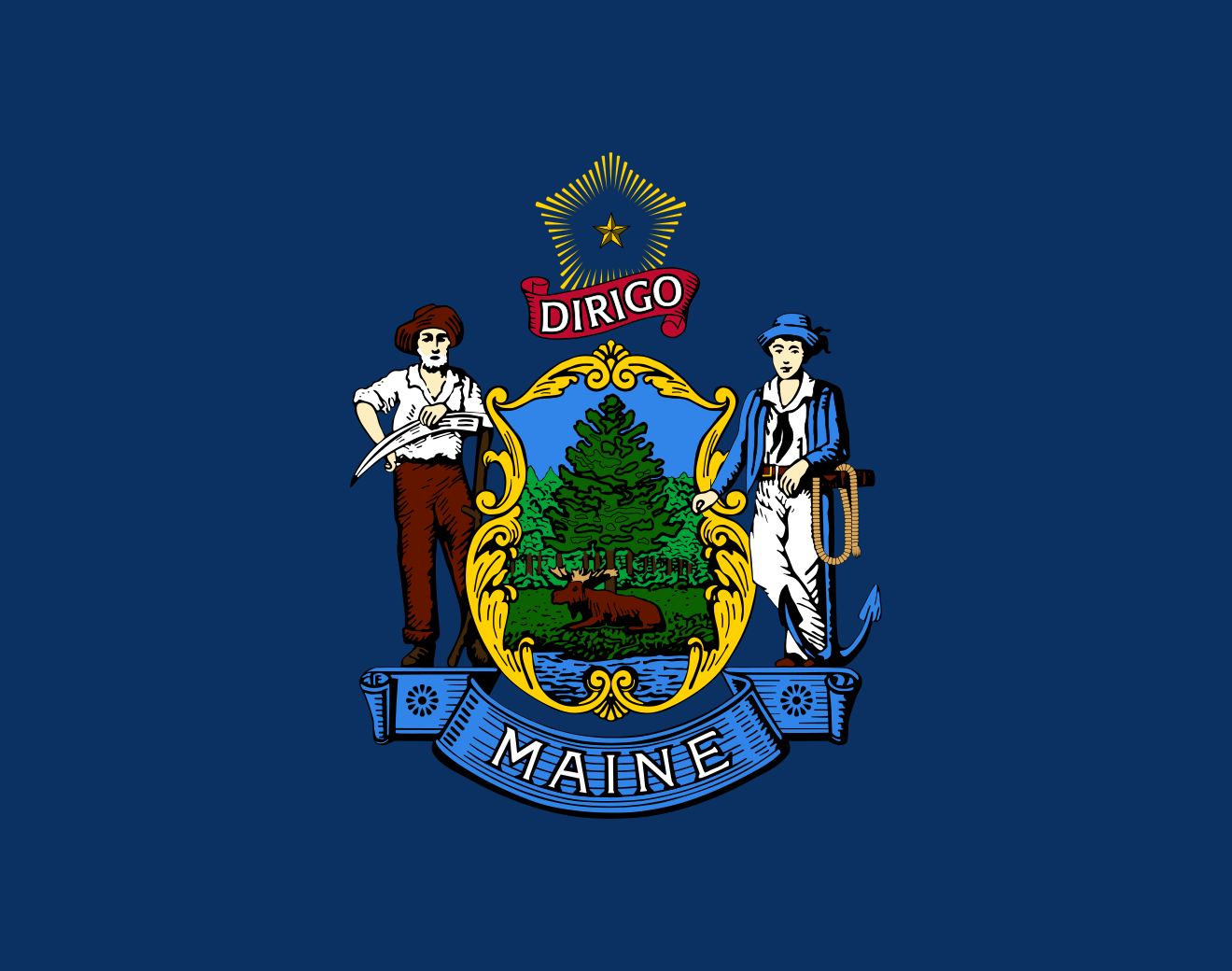
The flag of Maine features the state coat of arms on a dark blue field. The coat of arms depicts a farmer and a seaman, representing the traditional reliance on agriculture and the sea.
- Blue Field — mirrors the U.S. flag and represents loyalty.
- Pine Tree — represents the state's vast forests and the Pine Tree State nickname.
- North Star — reflects the state motto "Dirigo" (I lead) and being the northernmost state at its founding.
State Symbols
Overview
Maine, affectionately known as the 'Pine Tree State,' boasts a dramatically rugged coastline punctuated by iconic lighthouses and expansive forests. Renowned as a major producer of lobster and timber, this northeastern state offers breathtaking natural beauty alongside a thriving fishing and forestry industry, creating a unique legacy of maritime excellence and environmental stewardship.
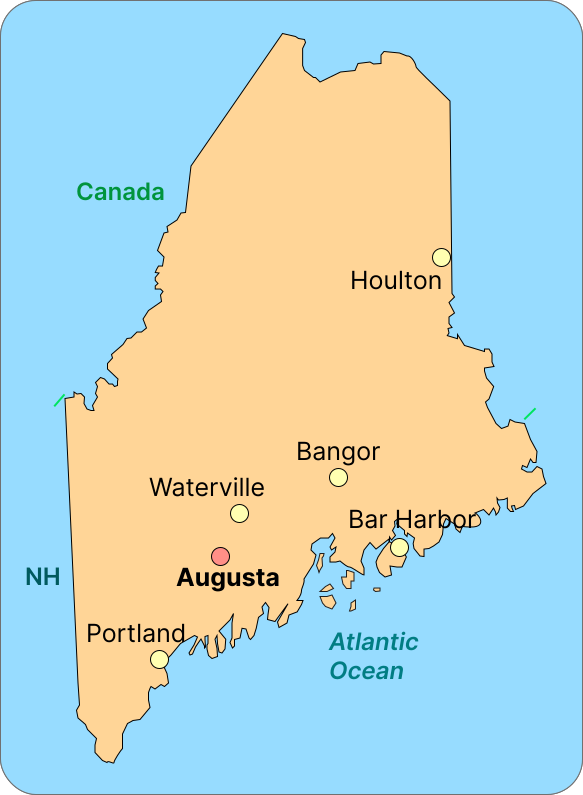
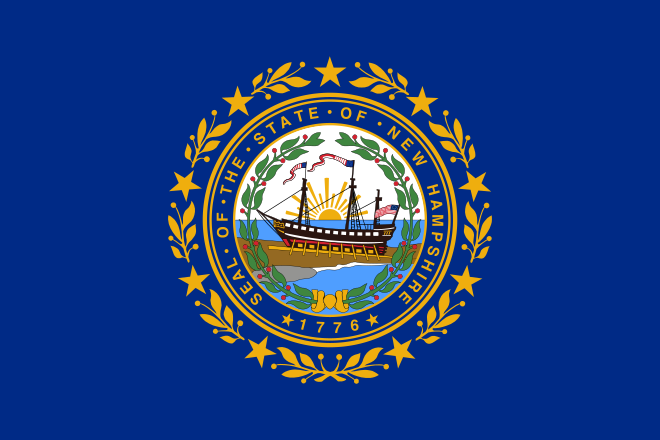
Geographically, it shares a border with New Hampshire and internationally with Canada, forming a closely connected regional network.
Historical Significance
Maine officially joined the Union on March 15, 1820, becoming the 23rd state as part of the Missouri Compromise. Prior to statehood, it was part of Massachusetts, and its history is rooted in a proud maritime and timber-cutting tradition, shaped by Wabanaki Native American heritage and a fierce independent New England spirit.
Famous Natives
Top Cities & Hubs
Portland
Population: ~68,000Maine's largest city and a celebrated culinary and arts destination, known for its historic Old Port district, working fishing wharves, and one of the most vibrant restaurant scenes in New England.
Lewiston
Population: ~37,000Located on the banks of the Androscoggin River, this historic mill city is undergoing a major urban renaissance and is home to a rich Franco-American heritage and Bates College.
Bangor
Population: ~32,000The "Queen City of the East" and a major commercial and cultural center for Northern Maine, also famous as the hometown of author Stephen King.
South Portland
Population: ~27,000Located directly on Portland Harbor with a working waterfront, known for its significant retail center and its proximity to the scenic Portland Head Light lighthouse.
Auburn
Population: ~24,000Twin city to Lewiston, together forming the second-largest metropolitan area in the state, serving as a regional center for healthcare and manufacturing.
How Maine Ranks
Compared to all 50 states — bar shows relative standing
Neighbors

Additional Information
03901 (Ogunquit) → 04992 (Bingham)
~428 ZIP codes statewide
Key Landmarks & Economy
Did You Know?
- Maine is the first state in the U.S. to see the sunrise each morning, as its easternmost point at West Quoddy Head is the nation's easternmost point.
- The iconic lobster roll sandwich is said to have been invented in Maine, cementing the state's deep connection to its celebrated maritime culinary heritage.
- Maine has more coastline than California, with over 3,500 miles of rugged shoreline when including all its islands, bays, and inlets.
Demographics
Population Growth
You might also like
🧠 Maine Trivia
5 questions — how well do you know the Prairie State?
Which famous national park is located on Mount Desert Island in Maine?
Which state is Maine's only U.S. neighbor?
What famous seafood is Maine most renowned for?
Which of the following authors, famous for writing horror novels, is from Maine?
What is the capital of Maine?