New Jersey
The Garden State
Quick Stats
Map
Seal & Motto
"Liberty and Prosperity"
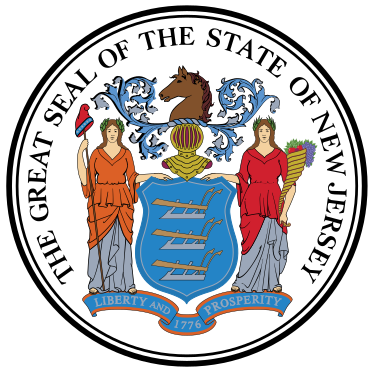
New Jersey's motto reflects the twin ideals of personal freedom and economic opportunity that defined its founding. First appearing on the 1777 state seal designed by Pierre Eugène du Simitière, it captures the spirit of a state that had already endured tremendous sacrifice during the Revolutionary War and was determined to build a prosperous future. The motto has remained unchanged on every version of the seal since.
Flag Meaning
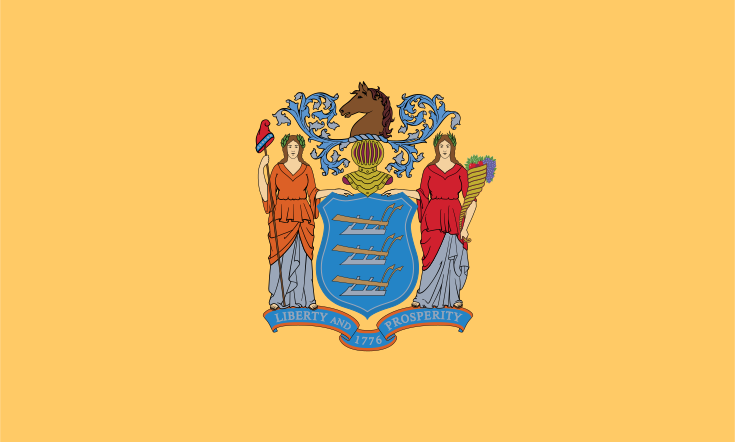
New Jersey's flag features a buff (tan-yellow) field — the same color as the facing on George Washington's Continental Army uniform — with the state coat of arms centered. The arms show three plows representing the state's agricultural heritage, two women figures representing Liberty and Ceres (goddess of grain), and a horse's head crest symbolizing the state's strength.
- Buff Field — Color chosen by George Washington to represent New Jersey's Continental Army regiments during the Revolutionary War.
- Three Plows — Represent New Jersey's fertile farmland and proud agricultural heritage, earning it the "Garden State" nickname.
- Liberty & Ceres — Two female figures: Liberty holds a staff and the cap of freedom; Ceres, goddess of grain, holds a cornucopia of abundance.
- Horse's Head Crest — A symbol of speed, strength, and the importance of horses to New Jersey's colonial economy and transportation.
State Symbols
Overview
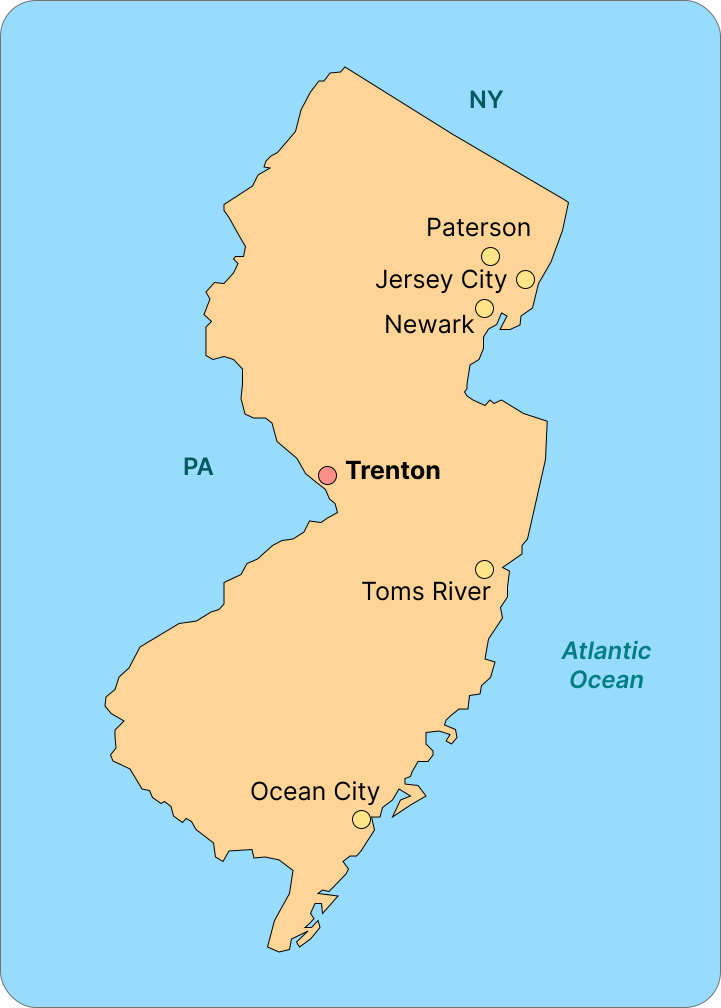
New Jersey — the "Garden State" — is the most densely populated state in the nation, yet its nickname is no irony. Despite its industrial skylines and suburban sprawl, New Jersey boasts fertile farmlands, stunning coastal barrier islands, and surprising stretches of protected forests and wetlands. Wedged between the mega-cities of New York and Philadelphia, the state punches far above its modest 8,700-square-mile size, hosting world-leading pharmaceutical companies, major financial institutions, and some of the most valuable commercial real estate on Earth.
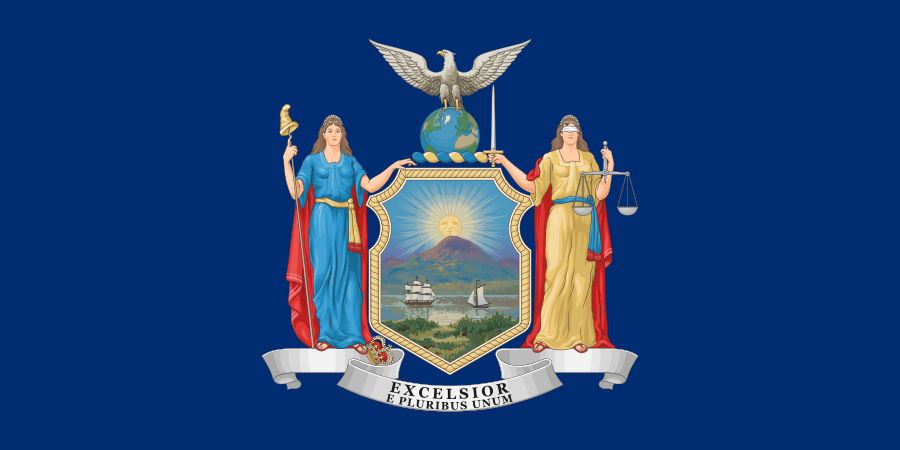
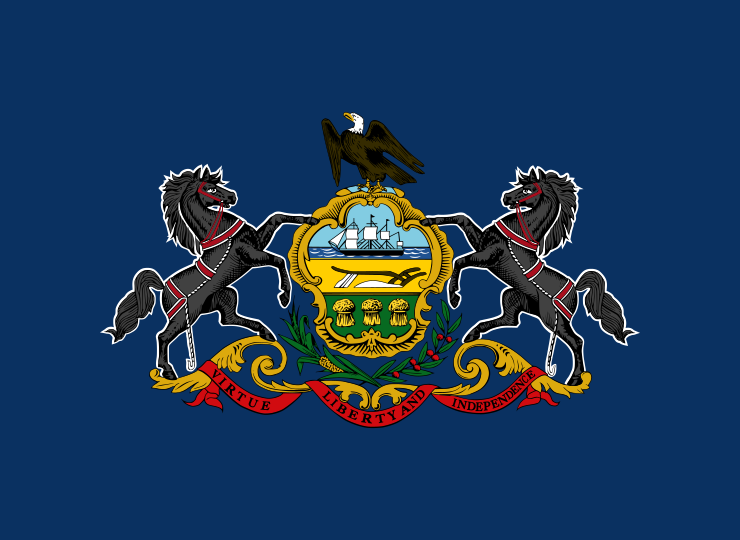
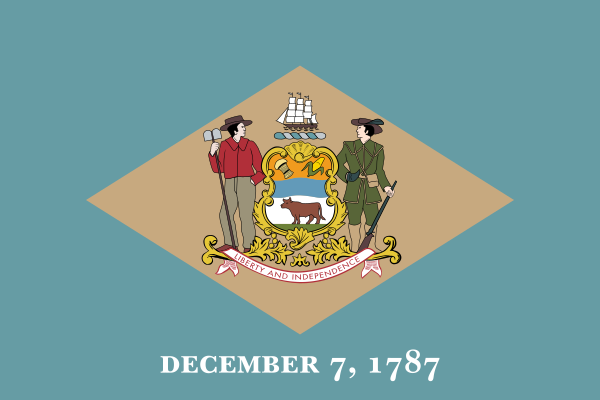
Geographically, it shares borders with New York, Pennsylvania, and Delaware, forming a closely connected regional network.
Historical Significance
New Jersey ratified the Constitution on December 18, 1787, becoming the 3rd state to join the Union. Nicknamed the "Crossroads of the Revolution," the state hosted nearly 100 Revolutionary War engagements — more than any other state. George Washington's daring Christmas night crossing of the Delaware River on December 25–26, 1776 led to a pivotal victory at Trenton, followed by another at Princeton, reversing American fortunes at the war's darkest moment. These victories boosted colonial morale and convinced France to enter the war on America's side.
Famous Natives
Top Cities & Hubs
Newark
Population: ~310,000New Jersey's largest city and a global hub for air travel via Newark Liberty International Airport, it's a rising center for insurance, finance, and the arts, undergoing a dramatic urban renaissance with new tech campuses and cultural institutions.
Jersey City
Population: ~292,000Known as "Wall Street West," a booming financial powerhouse directly across the Hudson from lower Manhattan, attracting major banks, hedge funds, and tech firms seeking proximity to NYC at a fraction of the cost.
Paterson
Population: ~160,000America's first planned industrial city — designed by Alexander Hamilton in 1791 — once famed as the "Silk City," now home to the stunning Great Falls National Historical Park, a 77-foot waterfall that powered 19th-century industry.
Elizabeth
Population: ~135,000A vital transportation and manufacturing hub adjacent to Newark Airport and the Port Newark-Elizabeth Marine Terminal — one of the busiest container ports on the East Coast and a backbone of the regional economy.
Trenton
Population: ~91,000The state capital on the Delaware River, site of Washington's pivotal 1776 victory — memorialized by the famous "Trenton Makes, the World Takes" bridge sign — and a city revitalizing its historic industrial character with arts and civic investment.
How New Jersey Ranks
Compared to all 50 states — bar shows relative standing (#1 = full bar)
Neighbors
Key Landmarks & Economy
Did You Know?
- New Jersey is the most densely populated state in the U.S., with over 1,263 people per square mile — yet nearly 40% of its land is protected open space, wetlands, and forests, including the vast 1.1-million-acre Pinelands National Reserve.
- The first intercollegiate football game in American history was played on November 6, 1869, in New Brunswick, New Jersey — Rutgers defeated Princeton 6-4 in a match that looked nothing like modern football.
- Atlantic City's street names — Boardwalk, Park Place, Marvin Gardens, and the rest — directly inspired the original American Monopoly board game, created in 1934, making New Jersey the most-played real estate in history.
Additional Information
07001 (Avenel) → 08989 (Windsor)
~540 ZIP codes statewide
201 (NE — Jersey City, Hackensack)
609 (South & Central — Trenton, Atlantic City)
732 (Central — New Brunswick, Toms River)
848 (Overlay for 732)
856 (SW — Camden, Vineland)
862 (Overlay for 973 — Newark)
908 (Central — Elizabeth, Somerville)
973 (N — Newark, Paterson, Morristown)
Demographics
Population Growth
You might also like
🧠 New Jersey Trivia
5 questions — how well do you know the Garden State?
What is New Jersey's official state nickname?
On what date was New Jersey admitted to the Union as the 3rd state?
Which legendary musician, born in Long Branch, New Jersey, is known as "The Boss"?
What is the capital city of New Jersey?
New Jersey has more companies in this industry than any other state in the nation — which is it?