Texas
The Lone Star State

Quick Stats
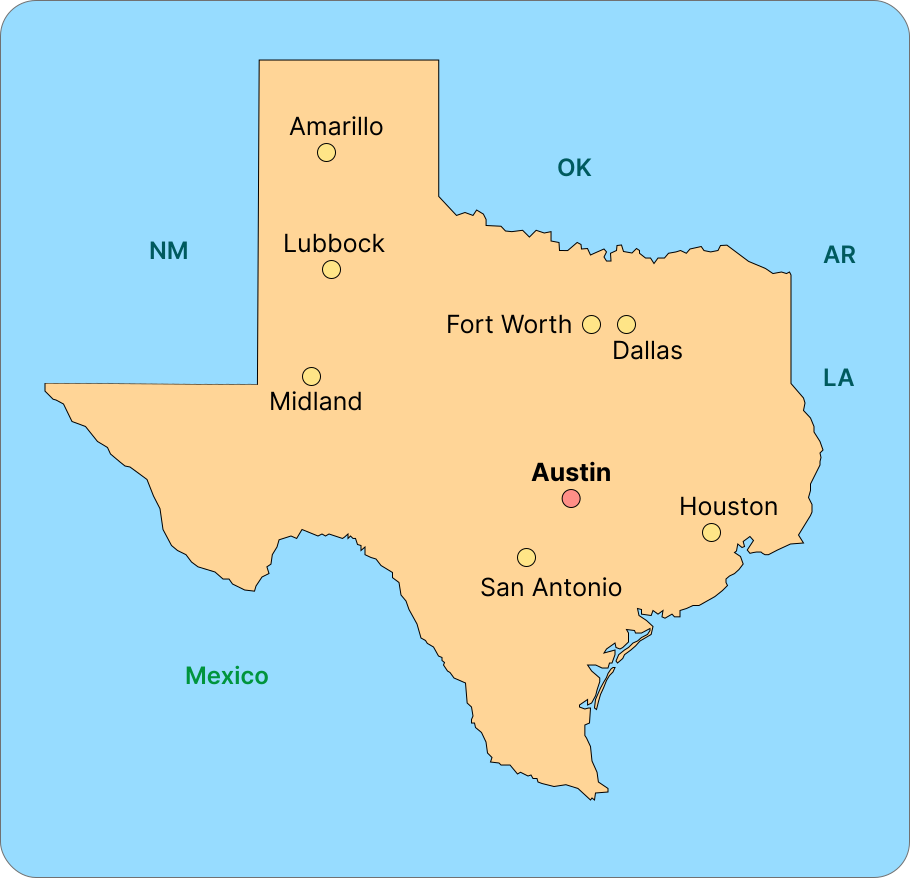
Map
Seal & Motto
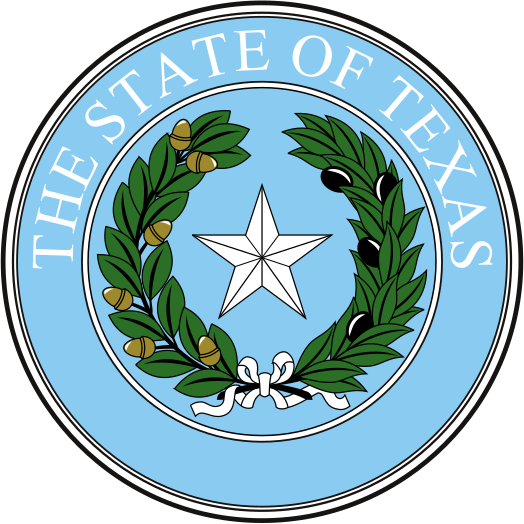
"Friendship"
Derived from the Caddo word “Tejas,” meaning ‘friends’ or ‘allies,’ this motto honors the indigenous peoples who first welcomed Spanish missionaries to the region. Adopted in 1930, it reflects the founding values of the Republic of Texas — that trust and alliance matter as much as the courage required to defend a new nation on the frontier.
Flag & Its Meaning
The Lone Star Flag features a vertical blue stripe bearing a single white star, paired with a white stripe above and a red stripe below. Adopted in 1839 by the Republic of Texas, it became the state flag in 1845 — one of few American state flags with a proud history as the flag of a sovereign republic.
- Blue Stripe — The vertical blue band at the hoist symbolizes loyalty, recalling the steadfast spirit of Texans who fought for their republic and carried that independent identity into statehood.
- Lone Star — A single white five-pointed star in the blue stripe is the defining symbol of Texas, representing its nine-year existence as an independent republic from 1836 to 1845.
- White Stripe — The upper horizontal white band represents purity and the moral conviction of the settlers and revolutionaries who built the Republic of Texas from the frontier wilderness.
- Red Stripe — The lower red band symbolizes bravery — the battlefield courage of the Alamo defenders, San Jacinto veterans, and every generation of Texans who fought for their freedom.
State Symbols
Overview
Texas, the “Lone Star State,” is a nation unto itself. The second-largest state in both size and population, it has the GDP of the world’s 8th-largest economy, more Fortune 500 headquarters than any other state, a 1,254-mile international border with Mexico, and a landscape spanning swampy bayous, subtropical beaches, high desert, piney woods, and mile-high mountains — all within one state whose cultural identity is as large as all of it combined.
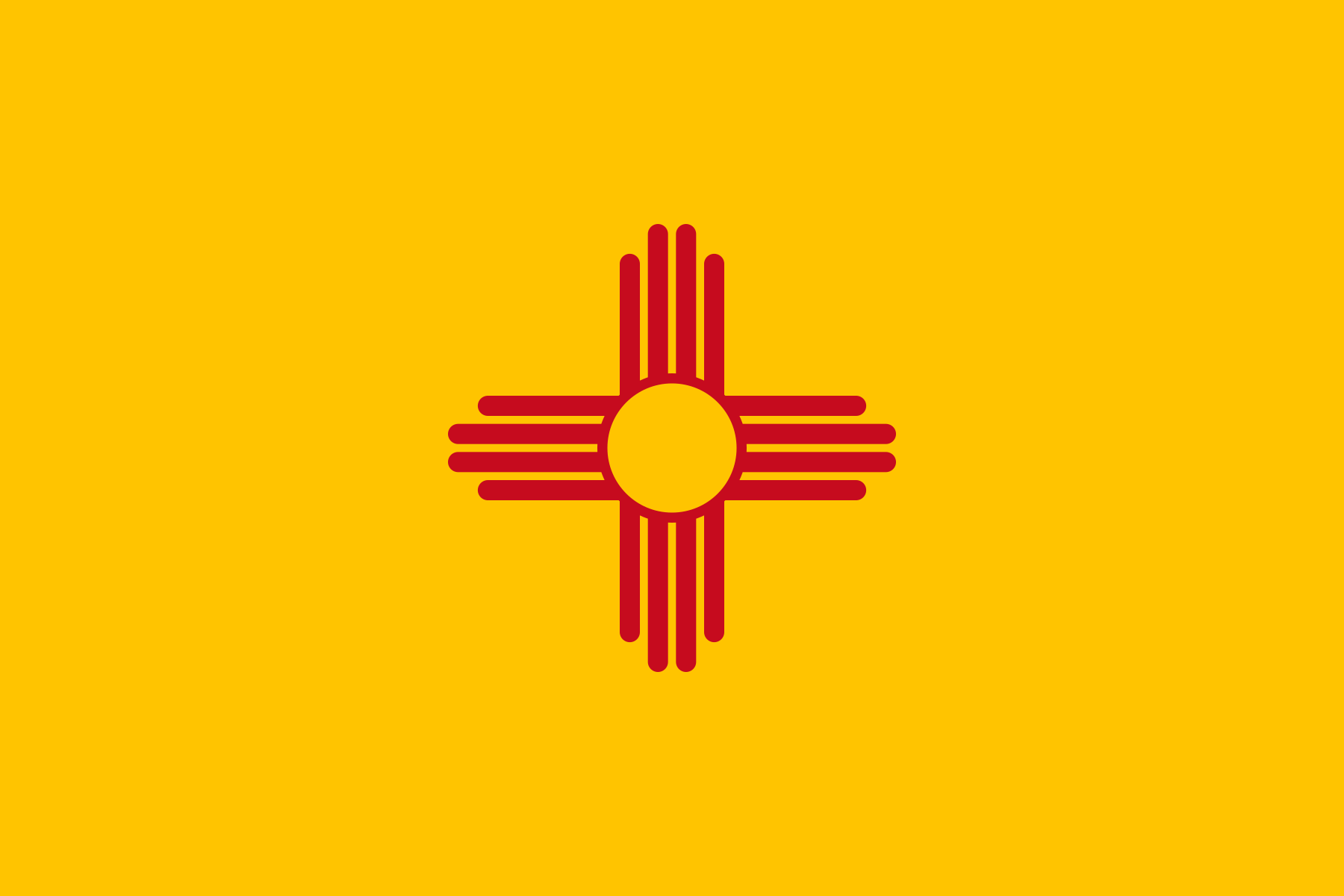
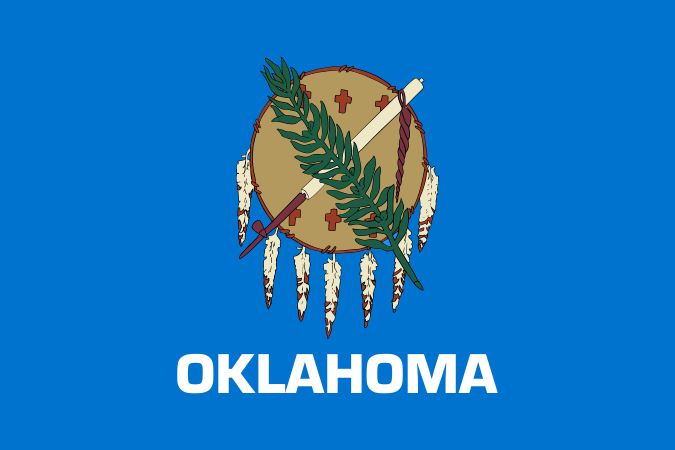
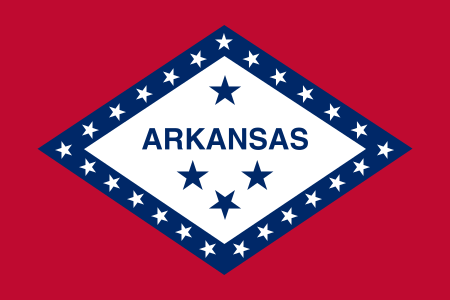
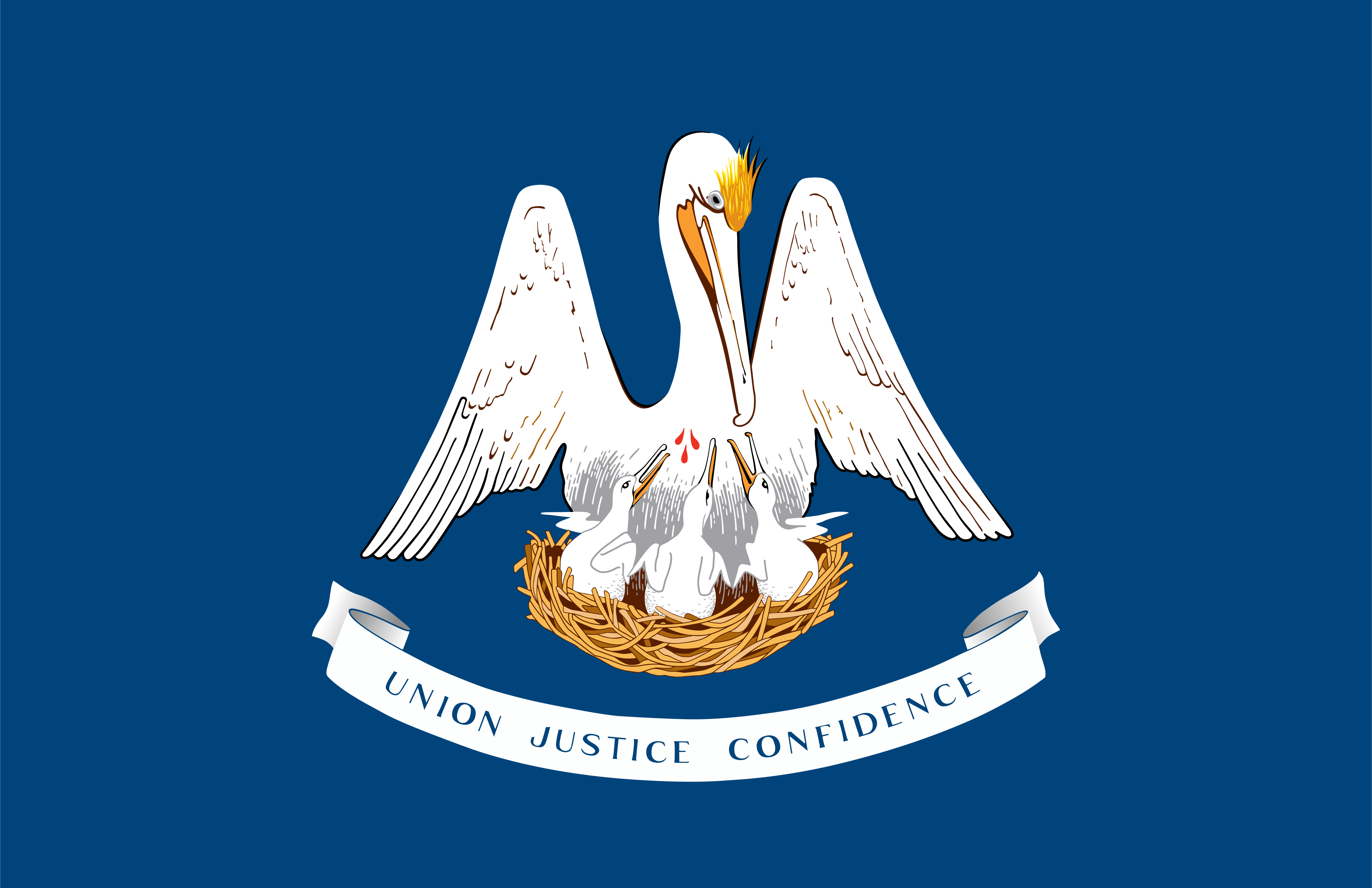
Geographically, it shares borders with NM, OK, AR, and LA, forming a closely connected regional network.
Historical Significance
Texas joined the Union on December 29, 1845, as the 28th state — but its story is unique in American history. After declaring independence from Mexico in 1836 and cementing it at the Battle of San Jacinto, Texas operated as an independent republic for nine years, the only U.S. state to do so. The 1901 Spindletop oil gusher near Beaumont launched America’s petroleum age and set the course for the 20th-century global economy.
Famous Natives
Top Cities & Hubs
Houston
Population: ~2.3MThe energy capital of the world and most ethnically diverse major U.S. city — home to NASA’s Johnson Space Center (Mission Control), the world’s largest medical complex, and the Port of Houston.
San Antonio
Population: ~1.5MA culturally rich city with deep Spanish colonial roots — home to the sacred Alamo, the festive River Walk, five historic missions, and the nation’s largest military installation complex.
Dallas
Population: ~1.3MThe financial and commercial capital of the Southwest, anchoring 23 Fortune 500 companies and a premier arts district that rivals any in the country.
Austin
Population: ~1.0MThe “Live Music Capital of the World” and state capital, now a global tech hub home to Tesla, Apple, Oracle, and Samsung campuses — with the most live music venues per capita in the world.
Fort Worth
Population: ~950kThe cultural soul of Texas cowboy heritage — featuring the legendary Fort Worth Stockyards, a world-class museum district including the Kimbell Art Museum, and a seamless identity with neighbor Dallas.
How Texas Ranks
Key Landmarks & Economy
Did You Know?
- The Texas State Capitol in Austin is the largest U.S. state capitol by square footage — standing 14 feet taller than the U.S. Capitol — built from sunset-red Texas granite quarried by convict labor.
- Texas has flown under the flags of six nations: Spain, France, Mexico, the Republic of Texas, the Confederate States, and the United States — hence "Six Flags over Texas."
- Texas operates its own independent power grid (ERCOT), the only contiguous U.S. state not connected to either national electrical grid — a fact with dramatic consequences during the 2021 winter storm.
Additional Information
75001 (Addison) – 79999 (El Paso area)
Demographics
Population Growth
You might also like
Test Your Texas Knowledge
5 questions about the Lone Star State
What is Texas's official state nickname?
What is the capital city of Texas?
Texas was the ___ state to join the Union?
Which Texas city is home to NASA's Mission Control?
How many nations' flags has Texas flown under?