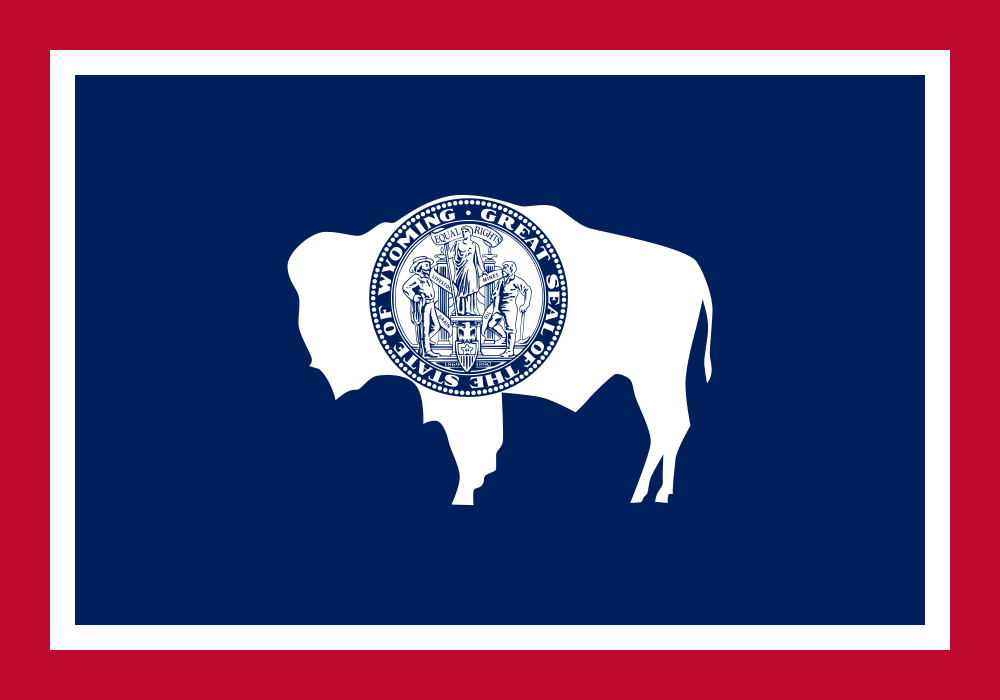
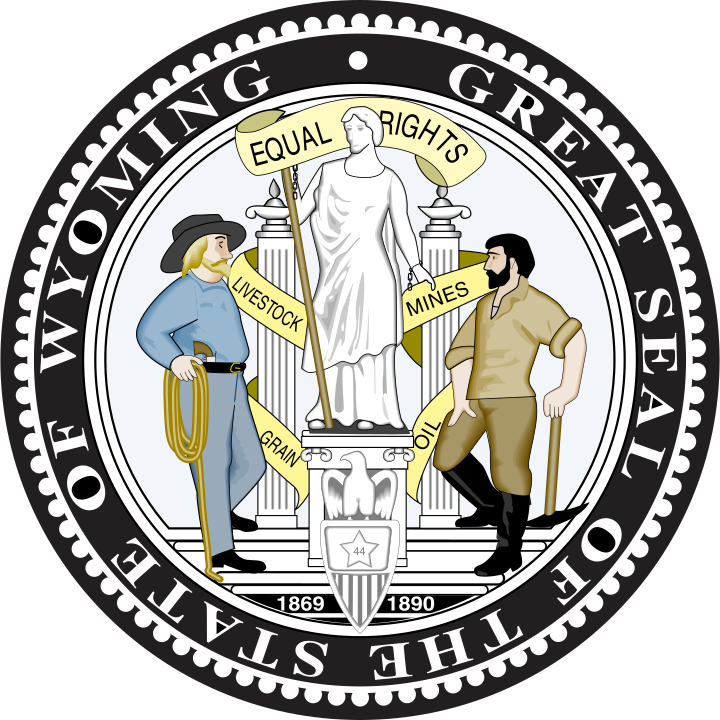
Reflects the state's lead in women's suffrage.
Adopted 1869/1890.
Wyoming is a vast and sparsely populated state in the Western U.S., defined by its extraordinary natural geography and rugged spirit. Home to the first national park in the world, it is a global leader in energy production and outdoor adventure, offering a landscape of high plains and dramatic mountain ranges unlike any other.
Wyoming officially joined the Union on July 10, 1890, as the 44th state. It earned the name "The Equality State" for its pioneering role in civil rights, becoming the first U.S. territory and later the first state to grant women the right to vote. Its history is also defined by the iconic legacy of the Oregon Trail and the development of the transcontinental railroad.
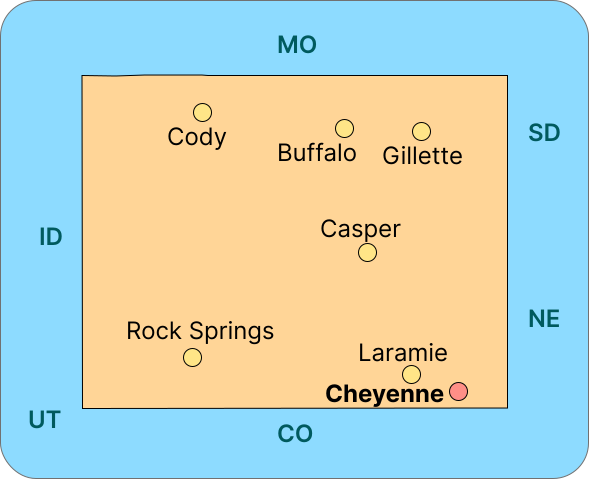
Cheyenne
Population: ~65,000The state capital and largest city, known for its historic Western heritage and as the site of Cheyenne Frontier Days—the world's largest outdoor rodeo.
Casper
Population: ~58,000Often called "The Oil City," it serves as a major hub for Wyoming's energy industry and is a gateway to the spectacular North Platte River.
Laramie
Population: ~32,000Home to the University of Wyoming, the state's only four-year public university, and a center for education and diverse culture in the high plains.
Gillette
Population: ~33,000The "Energy Capital of the Nation," providing a massive portion of the country's coal and serving as a major economic driver for the region.
Rock Springs
Population: ~23,000A historic mining and railroads town, known for its multi-cultural heritage and proximity to the stunning Flaming Gorge Recreation Area.
Region: West
- Wyoming was the first state to grant women the right to vote, dooming it "The Equality State" decades before the 19th Amendment.
- The state is home to Devils Tower, the nation's very first designated National Monument, established by Theodore Roosevelt in 1906.
- With fewer than 600,000 residents, Wyoming is the least populous state in the U.S., despite being the 10th largest by total land area.