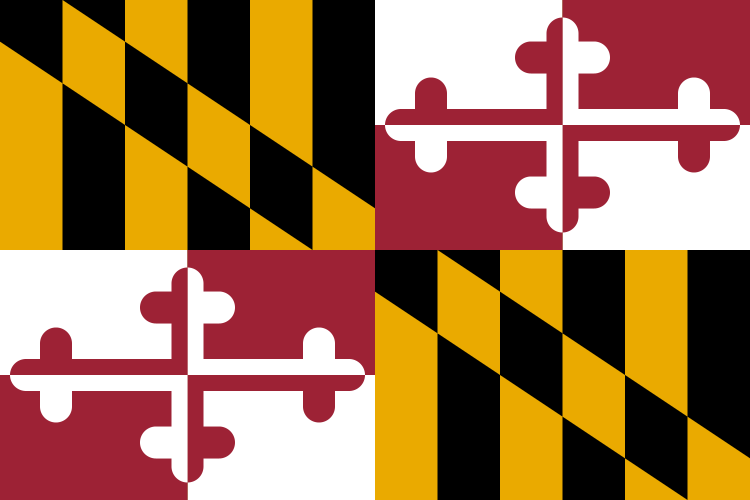
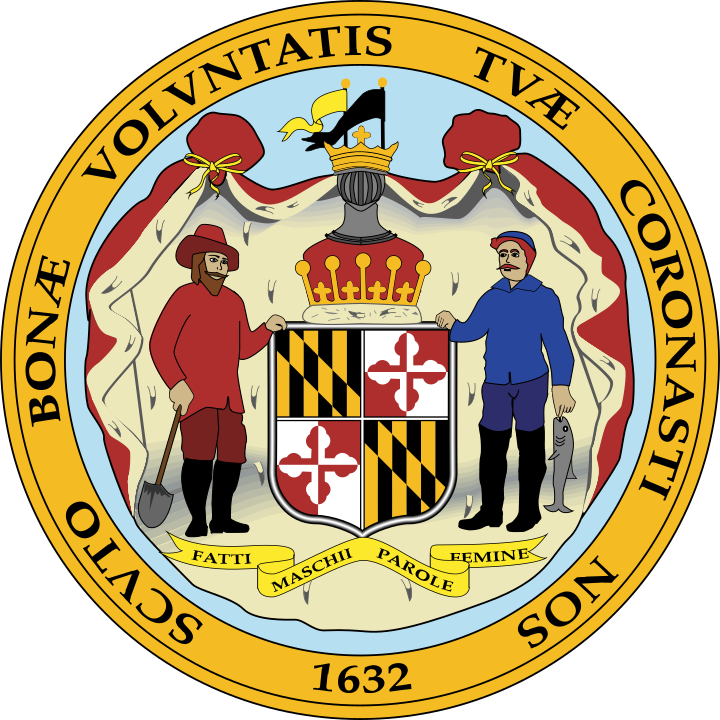
"Fatti maschii, parole femine"
Translation: "Strong deeds, gentle words"
Adopted 1874.
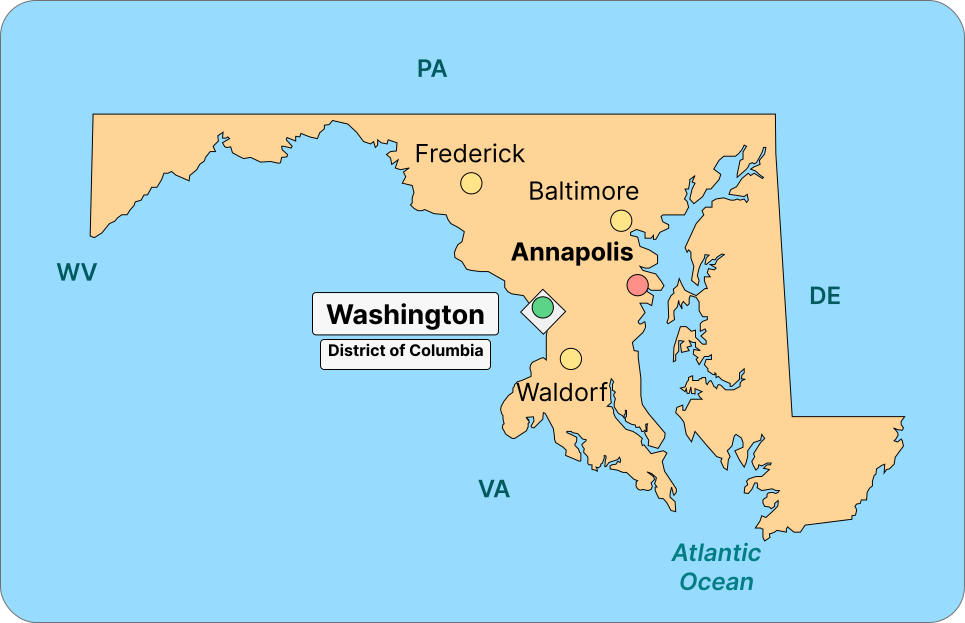
Maryland, affectionately nicknamed the 'Old Line State,' boasts a rich tapestry of maritime history and diverse industries. Situated along the Chesapeake Bay, this Atlantic coastal state is renowned for its vibrant seafood culture, especially its succulent blue crabs. Furthermore, Maryland thrives as a hub for biotechnology, defense contracting, and high-tech innovation, driving the region's economic growth and scientific progress.
Maryland joined the United States on April 28, 1788, as the 7th state, playing a crucial role in the nation's founding. Initially a British territory, its eventual accession solidified the nation’s expansion westward and solidified the crucial mid-Atlantic position while establishing a firm commitment to religious freedom and representative governance that continues to influence American democratic principles and social values today.
Baltimore
Population: ~569,000The largest city and a major seaport. Known for the Inner Harbor, Fort McHenry, and its medical institutions.
Columbia
Population: ~105,000A planned community between Baltimore and Washington D.C., consistently ranked as one of the best places to live.
Germantown
Population: ~91,000A fast-growing suburb in Montgomery County, part of the Washington D.C. metro area.
Silver Spring
Population: ~81,000A major business and entertainment hub just north of Washington D.C.
Waldorf
Population: ~81,000A major suburb in Southern Maryland known for its shopping and residential growth.
Region: Northeast
- Maryland is home to the United States’ oldest seafood market, dating back to 1792, in the bay area.
- The state’s nightmare nickname, ‘Old Line,’ stems from soldiers who marched in a single line during the American Revolution.
- Baltimore is known worldwide for its iconic crab cakes, a culinary tradition deeply rooted in the local seafood culture.