Nebraska
The Cornhusker State
Quick Stats
Map
Seal & Motto
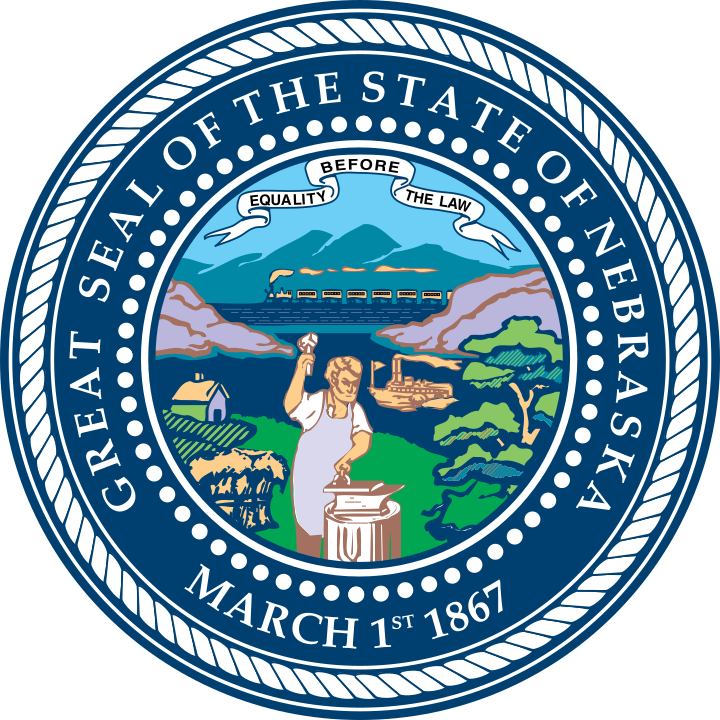
"Equality Before the Law"
Adopted in 1867 alongside statehood, Nebraska's motto enshrines the Fourteenth Amendment ideal that every citizen deserves equal justice regardless of background — a principle that resonated deeply in a state shaped by immigrant homesteaders and diverse pioneer communities.
Flag Meaning
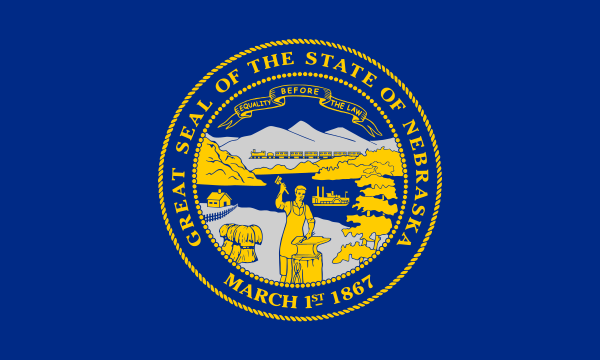
Nebraska's flag, adopted in its current form in 1925, displays the state seal in gold and silver on a field of national blue. The seal-centered design reflects Nebraska's identity as a plains state whose heritage is rooted in agriculture, industry, and justice.
- National Blue Field — represents vigilance, perseverance, and justice, echoing the colors of the United States flag and honoring Nebraska's loyalty to the Union.
- Gold & Silver Seal — the state seal rendered in gold and silver honors the motto "Equality Before the Law" and Nebraska's twin values of hard work and fair governance.
- Blacksmith & Settler — figures on the seal represent industry and agriculture, with a cabin, sheaves of wheat, and a steamboat on the Missouri River symbolizing Nebraska's frontier economy.
- Mountains & Sky — the background of the seal depicts the Rocky Mountains and a sunrise, representing Nebraska's position as the gateway to the American West.
State Symbols
Overview
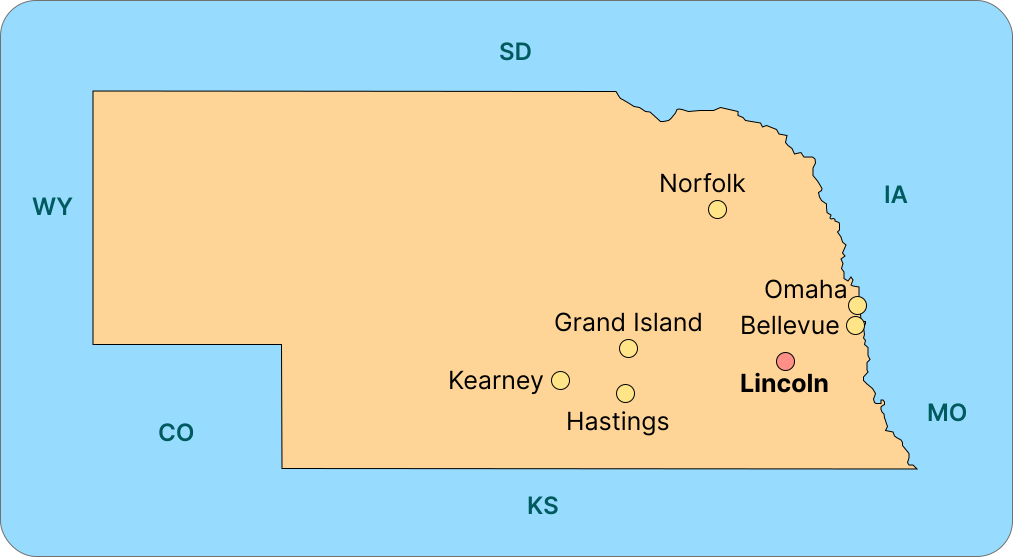
Nebraska, the 'Cornhusker State,' is a Great Plains titan where open prairie skies stretch to every horizon and the land feeds the nation. The state leads the U.S. in beef cattle production and ranks among the top producers of corn and soybeans, sustaining a robust agricultural economy that belies its modest population. Beyond the fields, Omaha punches well above its weight as a major financial and corporate center, home to Warren Buffett and more Fortune 500 companies per capita than most coastal cities.
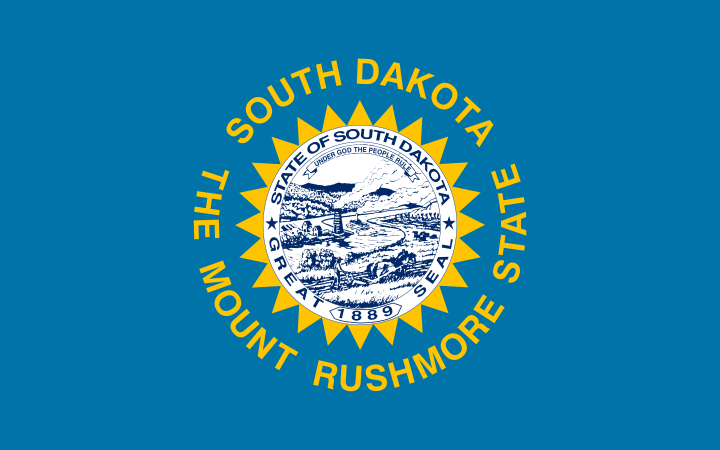
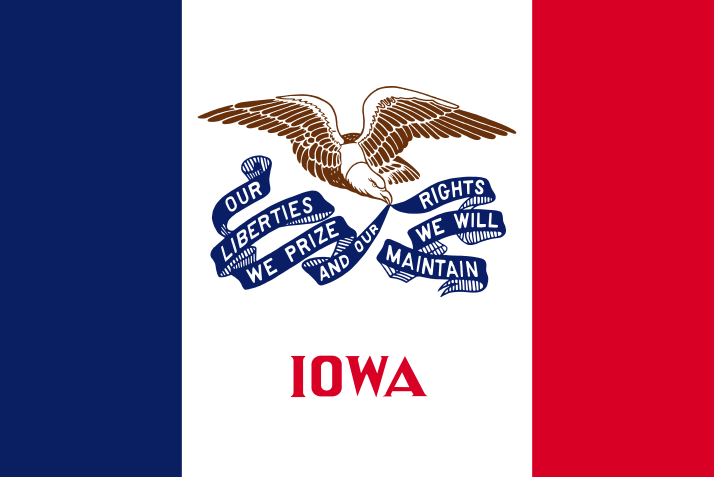
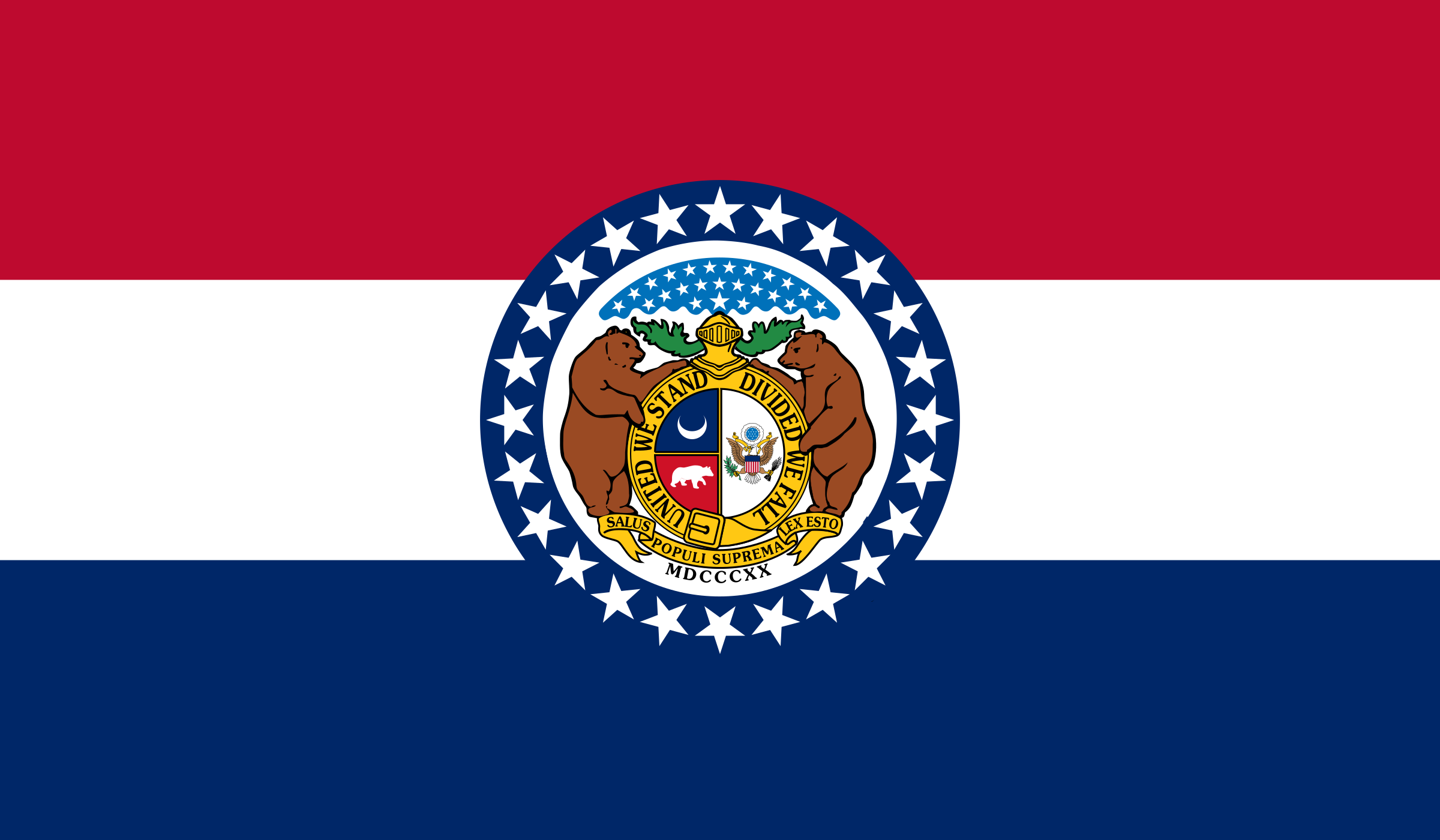
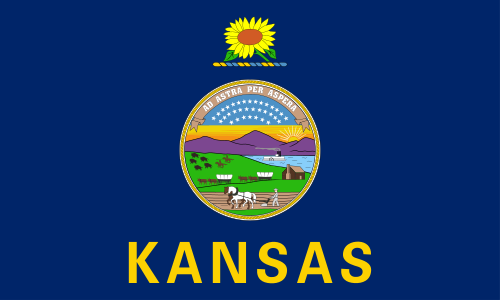
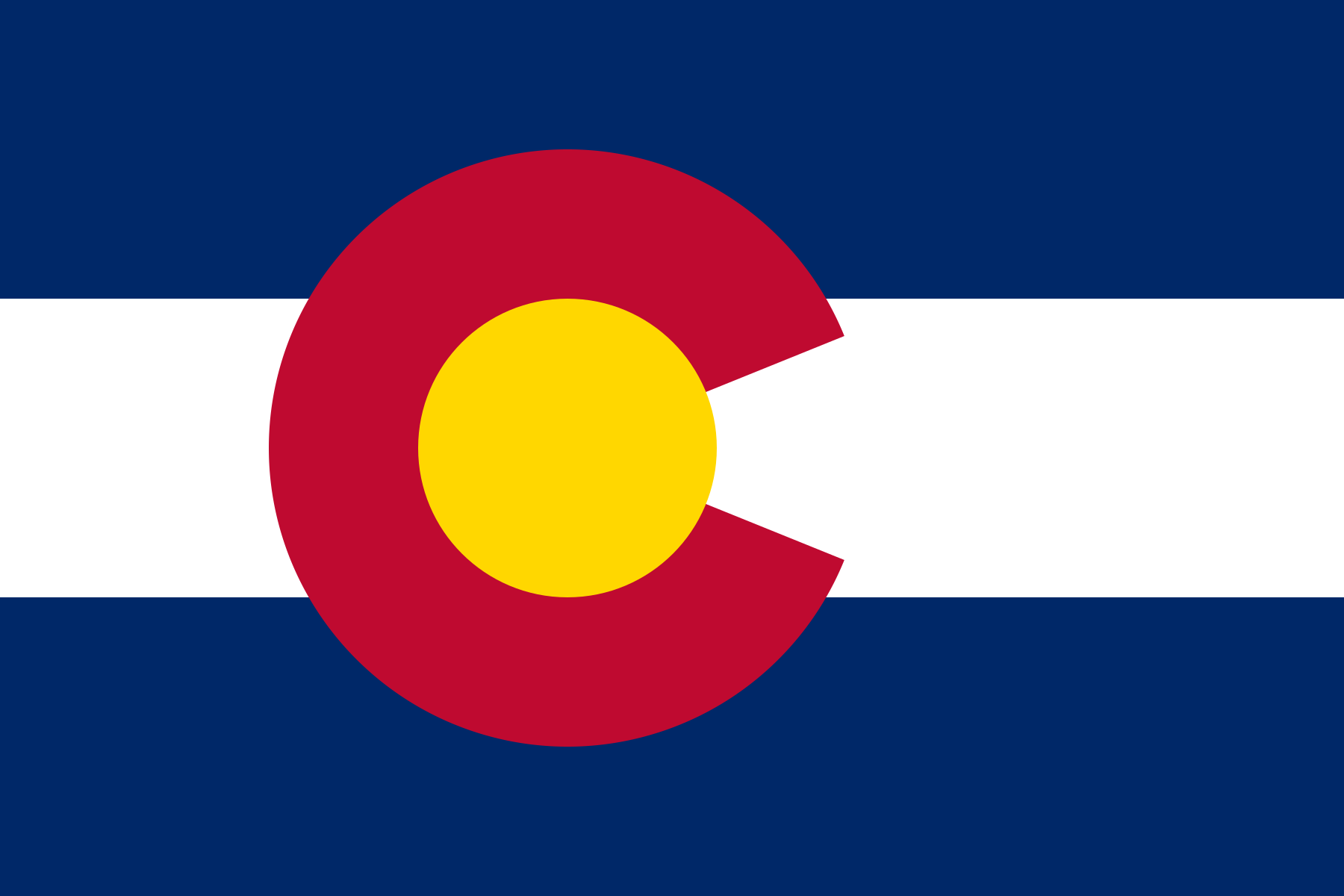
Geographically, it shares borders with South Dakota, Iowa, Missouri, Kansas, Colorado, and Wyoming, forming a closely connected regional network.
Historical Significance
Nebraska officially joined the Union on March 1, 1867, as the 37th state. Its history was forged by the wagon trails of pioneers — the Oregon, California, and Mormon Trails all followed the Platte River Valley through Nebraska — and later by the transcontinental railroad that opened the Great Plains to the dramatic Homestead era. The 1862 Homestead Act made Nebraska a magnet for settlers from across the world, transforming open prairie into a patchwork of family farms.
Famous Natives
Top Cities & Hubs
Omaha
Population: ~485,000Nebraska's largest city and a surprisingly powerful financial capital, the hometown of Warren Buffett and Berkshire Hathaway, a major center for insurance, telemarketing, and the Henry Doorly Zoo — consistently rated among the world's best.
Lincoln
Population: ~293,000The state capital and a vibrant university city, home to the University of Nebraska and its legendary "Big Red" football culture, featuring a stunning capitol building with a unique towered design.
Bellevue
Population: ~63,000The state's third-largest city, home to Offutt Air Force Base and a key part of the thriving Omaha metro area, with significant technology and defense sector employment.
Grand Island
Population: ~53,000The commercial heart of central Nebraska, a key agricultural and food processing hub and the annual gathering point for the spectacular Sandhill Crane migration along the Platte River.
Kearney
Population: ~34,000A growing regional hub on the historic Platte River route, home to the University of Nebraska at Kearney and a major crossroads for I-80 travelers crossing the nation.
How Nebraska Ranks
Compared to all 50 states — bar shows relative standing (#1 = full bar)
Key Landmarks & Economy
Did You Know?
- Nebraska is the only state in the U.S. with a unicameral (single-chamber) legislature — a unique system it has used since 1937.
- The Sandhill Crane migration on the Platte River each spring is the largest bird concentration in the Western Hemisphere, with over 500,000 cranes stopping to rest and feed.
- Kool-Aid was invented in Hastings, Nebraska in 1927 by Edwin Perkins, who transformed a liquid drink concentrate into the iconic powdered drink mix beloved by generations.
Additional Information
68001 (Abie) → 69367 (Whitney)
~450 ZIP codes statewide
402 (eastern NE incl. Omaha & Lincoln) · 308 (western & central NE)
Demographics
Population Growth
You might also like
🧠 Nebraska Trivia
5 questions — how well do you know the Cornhusker State?
What is Nebraska's most well-known nickname?
In what year was Nebraska admitted to the Union?
Which famous investor and CEO was born in Omaha, Nebraska?
What is the capital city of Nebraska?
Nebraska is the only U.S. state with what type of legislature?