North Dakota
The Peace Garden State
Quick Stats
Map
Seal & Motto
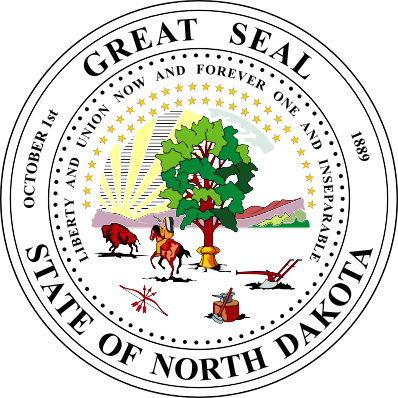
"Liberty and Union, Now and Forever, One and Inseparable"
Borrowed from Senator Daniel Webster's landmark 1830 Senate speech, this motto was adopted at statehood in 1889. It captures the fierce Union loyalty of the Northern Plains and the resolve of early settlers to build a civilization on the open prairies — inseparably bound to the American whole.
Flag & Its Meaning
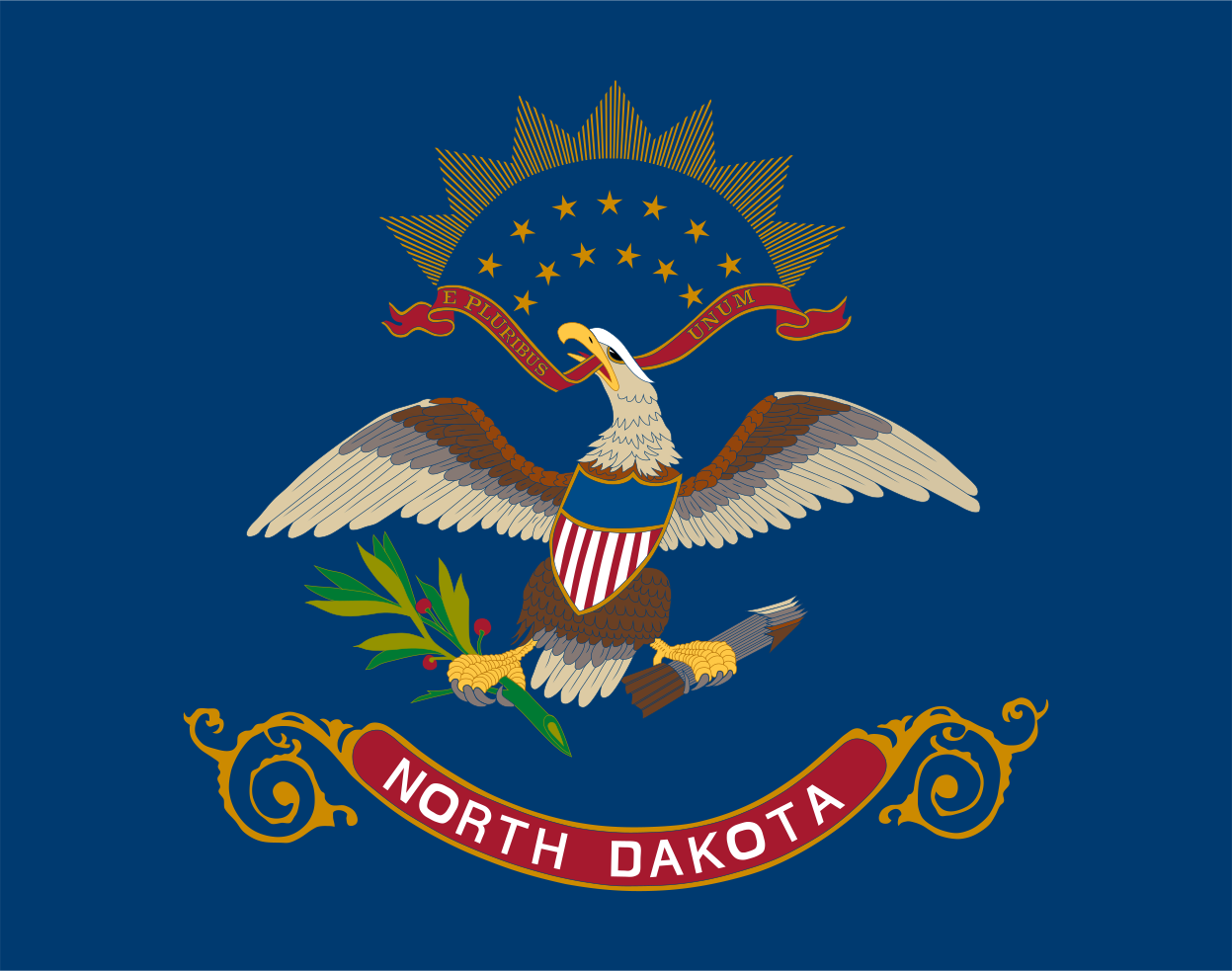
North Dakota's flag closely mirrors the U.S. Army's regimental colors — the only state flag with direct military heritage. A bald eagle bearing a starred shield spreads its wings above a red scroll reading "North Dakota," encircled by 13 golden stars.
- Navy Blue Field — Mirrors the U.S. Army flag tradition, honoring the regiment that carried this banner in the Spanish-American War of 1898 — the flag's direct military origin.
- Eagle with Shield — The bald eagle bearing the national shield represents strength and sovereignty, nearly identical to the Great Seal of the United States.
- Olive Branch & Arrows — The eagle holds an olive branch (peace) and 13 arrows (readiness for defense), declaring North Dakota stands ready for both diplomacy and war.
- 13 Stars — The arc of stars above the eagle honors the original 13 colonies, reminding all that even the newest states trace heritage to the Republic's founding.
State Symbols
Overview
North Dakota, the "Peace Garden State," is a land of extraordinary contrasts — infinite prairie skies above vast golden wheat fields, the brooding volcanic Badlands carved by ancient rivers, and a modern oil economy that transformed it from a sleepy frontier to one of the nation's fastest-growing economies in the 21st century. Bordered by Canada to the north, it has more in common with the wide northern plains than with any one American region.
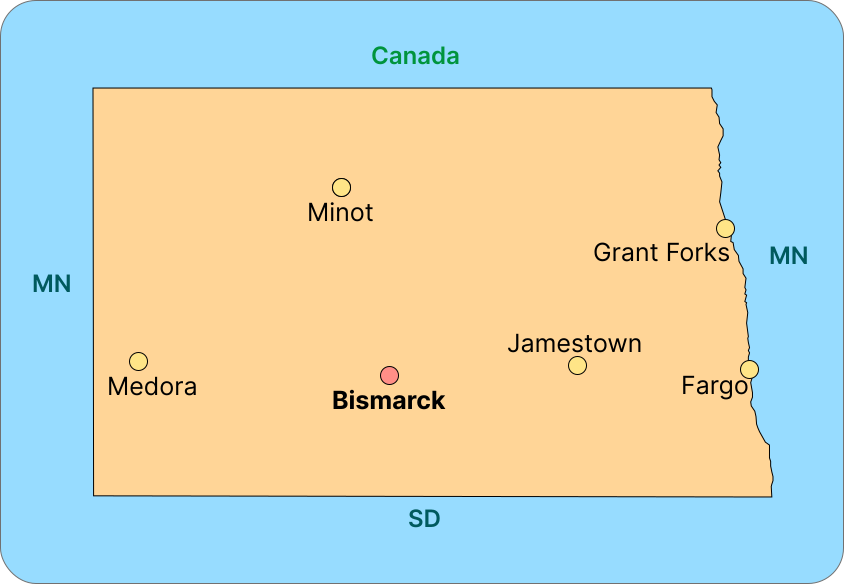
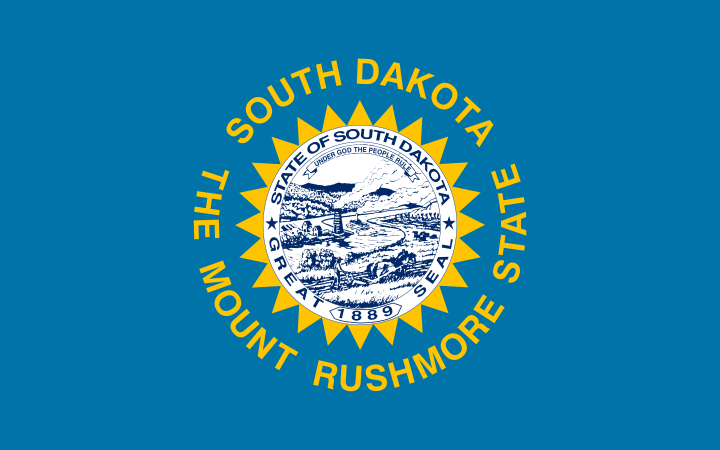
Geographically, it shares borders with MN, SD, and MT, as well as internationally with Canada, forming a closely connected regional network.
Historical Significance
North Dakota entered the Union on November 2, 1889, as the 39th state — on the exact same day as South Dakota. President Benjamin Harrison deliberately shuffled the proclamation papers so no one would know which state was admitted first. Its history spans from the Mandan and Hidatsa nations, through Lewis and Clark's winter at Fort Mandan in 1804–05, to the dramatic Bakken oil boom of the 21st century that briefly made it one of America's top two oil-producing states.
Famous Natives
Top Cities & Hubs
Fargo
Population: ~130,000The state's largest city, a thriving cultural and educational hub on the Red River, home to North Dakota State University and a nationally recognized arts scene that far exceeds its size.
Bismarck
Population: ~80,000The state capital, situated on a bluff above the Missouri River, known for its striking Art Deco capitol skyscraper — the tallest building in North Dakota and one of the most distinctive state capitols in America.
Grand Forks
Population: ~60,000Home to the University of North Dakota and a national leader in drone and unmanned aircraft systems research, this Red River Valley city punches well above its weight in aerospace innovation.
Minot
Population: ~50,000Nicknamed "The Magic City" for its rapid railroad-era growth, home to Minot Air Force Base and the annual North Dakota State Fair, one of the region's great summer celebrations.
West Fargo
Population: ~42,000One of the nation's fastest-growing cities, a booming commercial and residential suburb of Fargo with a strong manufacturing, agriculture equipment, and logistics economy.
How North Dakota Ranks
Among all 50 U.S. states
Produces ~40% of all U.S. sunflowers — no other state comes close.
Leads the nation in spring wheat and durum wheat production.
The Bakken shale boom made ND one of America's top oil-producing states.
One of the least populous states, with ~779,000 residents.


Key Landmarks & Economy
Did You Know?
- North Dakota produces more sunflowers, canola, and honey than any other U.S. state — the prairie soil and climate create ideal conditions that no other region can match.
- The International Peace Garden on the Canadian border is one of the few places on Earth with a permanent monument to world peace, maintained jointly by the U.S. and Canada.
- Lewis and Clark spent the winter of 1804–05 at Fort Mandan in present-day North Dakota, where they met Sacagawea, who would guide their expedition to the Pacific.
Additional Information
58001 (Abercrombie) → 58856 (Zahl)
~360+ ZIP codes statewide
Statewide single area code
Demographics
Population Growth
You might also like
Test Your North Dakota Knowledge
5 questions · See how well you know the Peace Garden State
What is North Dakota's official state nickname?
In what year was North Dakota admitted to the Union?
Which famous bandleader was born in Strasburg, North Dakota?
What is the capital city of North Dakota?
Which president has a national park named after him in North Dakota?