"She Flies With Her Own Wings"
Latin. Adopted 1987.
Oregon is a breathtaking state in the Pacific Northwest, renowned for its diverse landscapes that range from the rugged Pacific coastline to the thick forests of the Cascade Mountains. A leader in environmental sustainability and outdoor culture, Oregon offers a unique blend of natural beauty and urban innovation for students and adventurers today.
Oregon officially joined the United States on February 14, 1859, as the 33rd state. Its admission followed decades of exploration and settlement along the historic Oregon Trail, which brought thousands of pioneers westward. The state's history is deeply rooted in its indigenous cultures and its early role in the burgeoning fur trade industry.
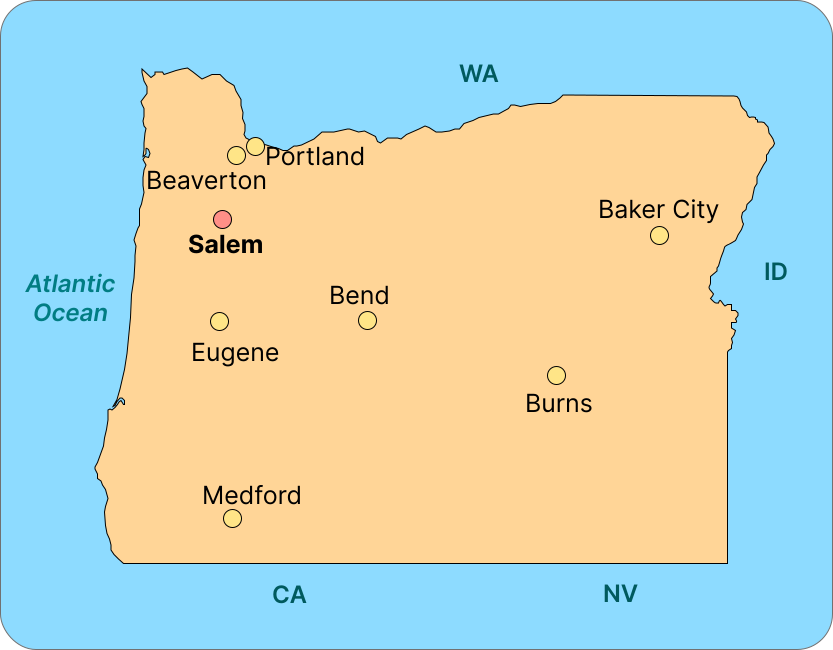
Portland
Population: ~650,000The state's largest city, famous for its parks, bridges, bicycle paths, and vibrant "Keep Portland Weird" culture.
Salem
Population: ~175,000The state capital, located in the fertile Willamette Valley and known for its historic architecture and beautiful gardens.
Eugene
Population: ~175,000Home to the University of Oregon and a major hub for outdoor recreation, the arts, and track-and-field history.
Gresham
Population: ~115,000A major residential and commercial city located just east of Portland at the foot of the magnificent Mt. Hood.
Hillsboro
Population: ~105,000The heart of the Silicon Forest, home to many high-tech companies and a growing diverse community.
Region: West
- Oregon is home to the world's smallest park, Mill Ends Park in Portland, which measures only about 2 feet across and was officially designated in 1948.
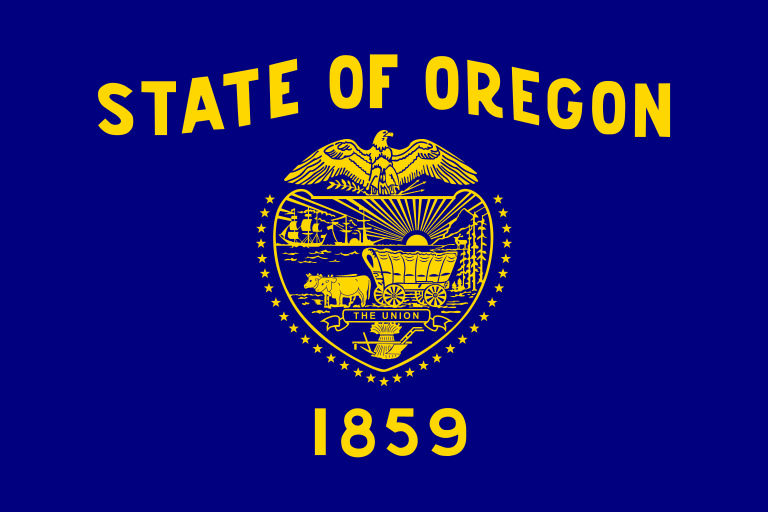
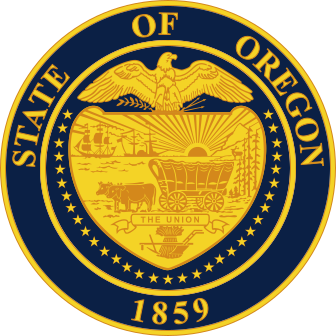
- The state is the only one in the U.S. with a two-sided flag, featuring the state seal on the front and a golden beaver on the back.
- Oregon has the most ghost towns of any state in the nation, reflecting its rich and sometimes unpredictable mining and pioneer history.