One of the 13 Original Colonies
Last of the 13 colonies to ratify the Constitution.
Rhode Island is the smallest state in the union by land area, but it packs a significant punch with its dense population and over 400 miles of stunning coastline. Known as the "Ocean State," it serves as a major center for sailing, education, and maritime history, providing a unique blend of colonial charm and modern innovation today.
Rhode Island officially joined the United States on May 29, 1790, as the 13th state. It was the last of the original colonies to ratify the Constitution, reflecting its fierce commitment to religious freedom and individual rights. Today, its historic sites stand as a testament to its role as the birthplace of the American Industrial Revolution.
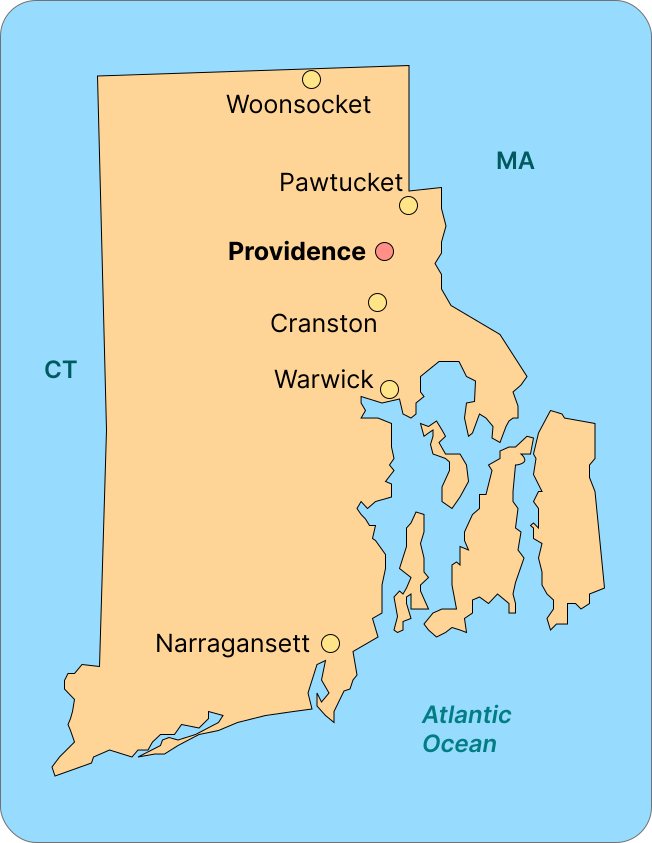
Providence
Population: ~190,000The state capital and largest city, known for its vibrant arts scene, historic jewelry district, and the stunning WaterFire installation.
Warwick
Population: ~82,000A major commercial hub housing the state's main airport, known for its extensive coastline and shopping destinations.
Cranston
Population: ~82,000A diverse and thriving city adjacent to Providence, offering a mix of established residential and commercial centers.
Pawtucket
Population: ~75,000A historic city known as the Cradle of the Industrial Revolution, now a growing hub for artists and creative industries.
East Providence
Population: ~47,000A prominent residential city located along the Seekonk River, offering community-oriented atmosphere and scenic views.
Region: Northeast
- Despite its name, most of Rhode Island is part of the mainland, though it includes over 30 islands within Narragansett Bay.
- The state is home to the oldest carousel in the United States, the Flying Horse Carousel in Watch Hill, in operation since 1884.
- Rhode Island was the first colony to declare its independence from Great Britain on May 4, 1776, two months before the national declaration.