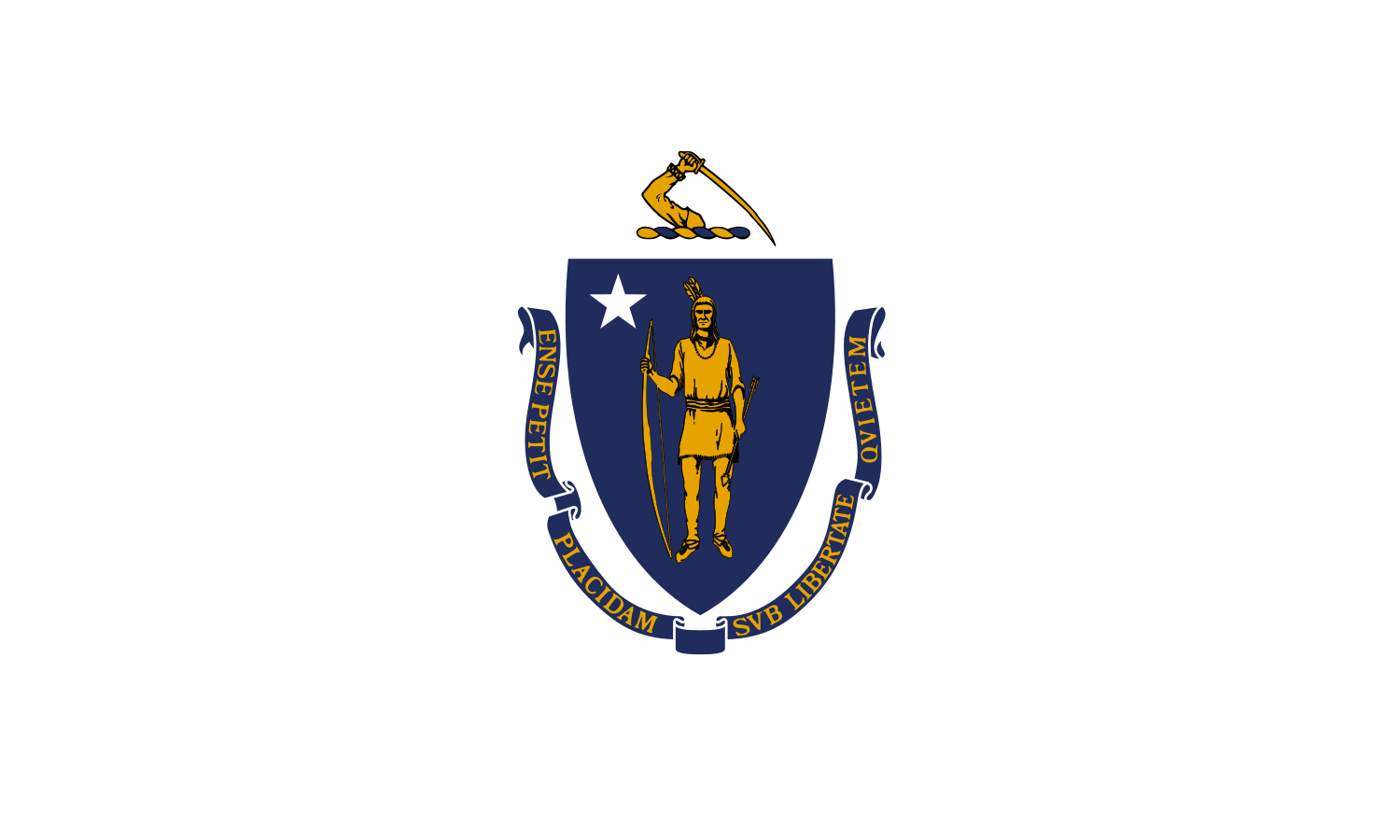
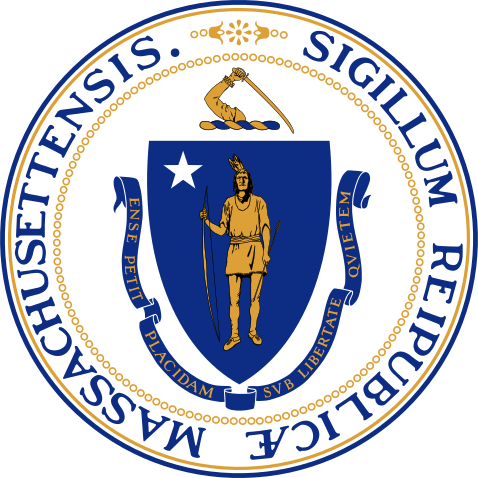
"Ense petit placidam sub libertate quietem"
Translation: "By the sword we seek peace, but peace only under liberty."
Adopted 1775.
Massachusetts, a cornerstone of American history and innovation, boasts a rich legacy as the launching pad for the Revolutionary War and a fervent embrace of intellectual pursuit. Known for its prestigious Ivy League universities and burgeoning biotech industry, Massachusetts consistently drives advancements across multiple sectors, cementing its reputation as a global leader in education, science, and democratic progress.
Massachusetts played a pivotal role in the birth of the United States, joining the Union on February 6, 1788, as the 6th state. The state’s strategic location and influential populace shaped the nation’s early government, solidifying Massachusetts’s foundational position within the burgeoning American republic while establishing a legacy of social reform and intellectual leadership that continues to define its character today.
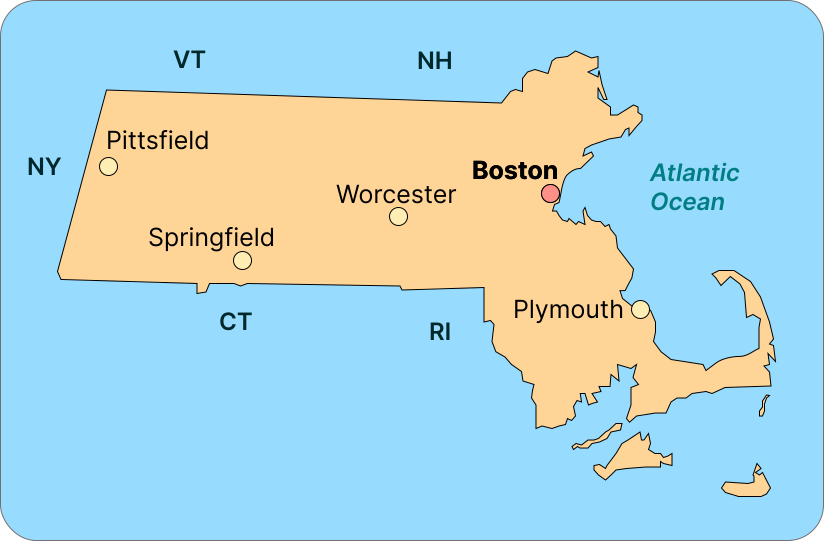
Boston
Population: ~654,000The state capital and cultural and financial hub of New England. Famous for its history and universities.
Worcester
Population: ~205,000Located in the heart of the Commonwealth, known for its healthcare and biotechnology industries.
Springfield
Population: ~154,000Known as the "City of Firsts" and the birthplace of basketball.
Cambridge
Population: ~117,000Home to Harvard University and MIT. A global center for education and innovation.
Lowell
Population: ~113,000Known as the cradle of the American Industrial Revolution for its textile mills.
Region: Northeast
- Massachusetts was the first state to ratify the U.S. Constitution, solidifying its role as a foundation.
- The first public school in America, Boston Latin School, was established in 1635, setting a precedent.
- The iconic Paul Revere statue in Boston depicts the historic rider who warned colonists about approaching British troops.