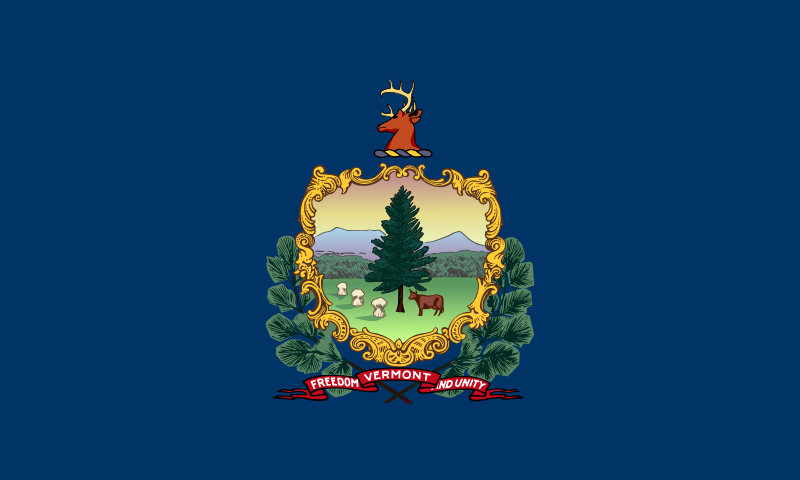
Reflects Vermont's commitment to community.
Adopted 1791.
Vermont is a picturesque state in the New England region, famous for its forested natural beauty and small-town charm. As the second-least-populous U.S. state, it is a leader in sustainable agriculture and artisanal products, particularly maple syrup, offering a unique blend of heritage and environmental consciousness.
Vermont officially joined the Union on March 4, 1791, as the 14th state and the first admitted after the original 13 colonies. Before statehood, it existed as an independent republic for 14 years. It was the first state to partially abolish slavery in its constitution, setting an early American precedent for civil rights.
Burlington
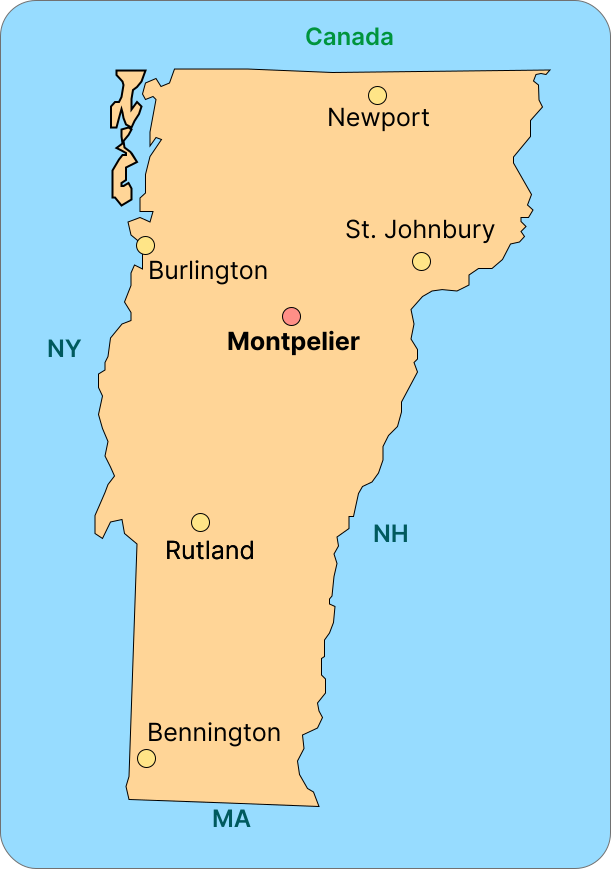
Population: ~45,000The state's largest city, situated on Lake Champlain, known for its vibrant arts scene, the University of Vermont, and progressive culture.
South Burlington
Population: ~20,000A major commercial and residential hub in the Burlington metropolitan area, home to the state's largest airport and various tech companies.
Rutland
Population: ~16,000Historically known as "Marble City," Rutland is a major center for commerce and recreation in central Vermont, near popular ski resorts.
Barre
Population: ~9,000Established as the "Granite Capital of the World," Barre is famous for its massive quarries and high-quality granite used in monuments worldwide.
Montpelier
Population: ~8,000The state capital and the smallest capital city in the U.S., celebrated for its historic architecture and vibrant community life.
Region: Northeast
- Vermont is the only New England state that does not border the Atlantic Ocean.
- The state leads the nation in microbreweries per capita, earning it a global reputation for craft beer.
- Until 1996, Vermont was the only U.S. state without a Walmart within its borders.