Nevada
The Silver State
Quick Stats
Map
Seal & Motto
"All For Our Country"
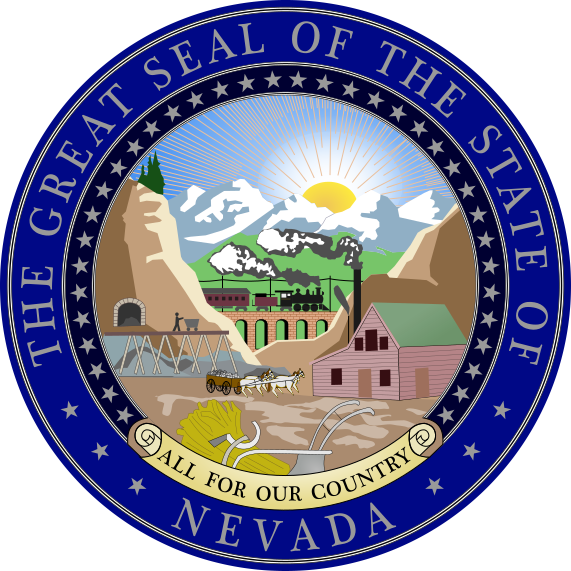
Adopted in 1866, Nevada's motto reflects the fierce patriotism that drove its rushed admission to the Union on October 31, 1864 — just days before a presidential election — when the Lincoln administration needed Nevada's silver wealth and electoral votes to secure the war effort and pass the Thirteenth Amendment abolishing slavery.
Flag Meaning
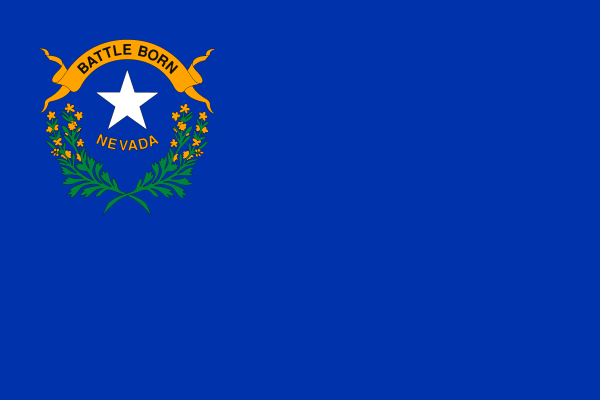
Nevada's flag, in its current form since 1929, displays a cobalt blue field bearing a silver star framed by two sagebrush sprigs and a "Battle Born" scroll — a spare, proud design that encapsulates the state's frontier origins, mineral heritage, and Civil War–era statehood.
- Cobalt Blue Field — represents loyalty, vigilance, and the vast Nevada sky, mirroring the national colors and honoring Nevada's devotion to the Union.
- Silver Star — a direct tribute to Nevada's silver-mining heritage that earned it the "Silver State" nickname and funded the Union's Civil War efforts.
- "Battle Born" Scroll — commemorates Nevada's admission to the Union while the nation was at war, a point of enduring pride unique among U.S. states.
- Sagebrush Sprigs — the state flower flanks the star, representing Nevada's rugged desert landscape and the hardy resilience of its people and pioneer spirit.
State Symbols
Overview
Nevada, the 'Silver State,' is the driest state in the U.S. and one of the most dramatic — a land of neon-blazing desert cities, vast empty basins, and a pioneering spirit of reinvention. Best known as the world's entertainment capital, it is also a rapidly growing tech and logistics hub, with Tesla's Gigafactory, Apple's data centers, and a booming renewable energy sector reshaping the Silver State's economy far beyond the casino floor.
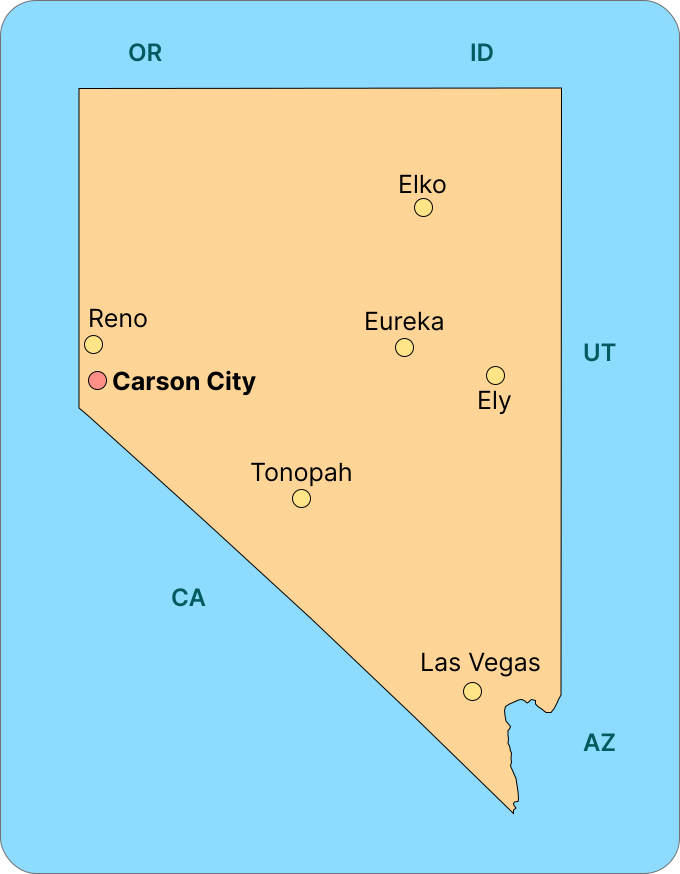
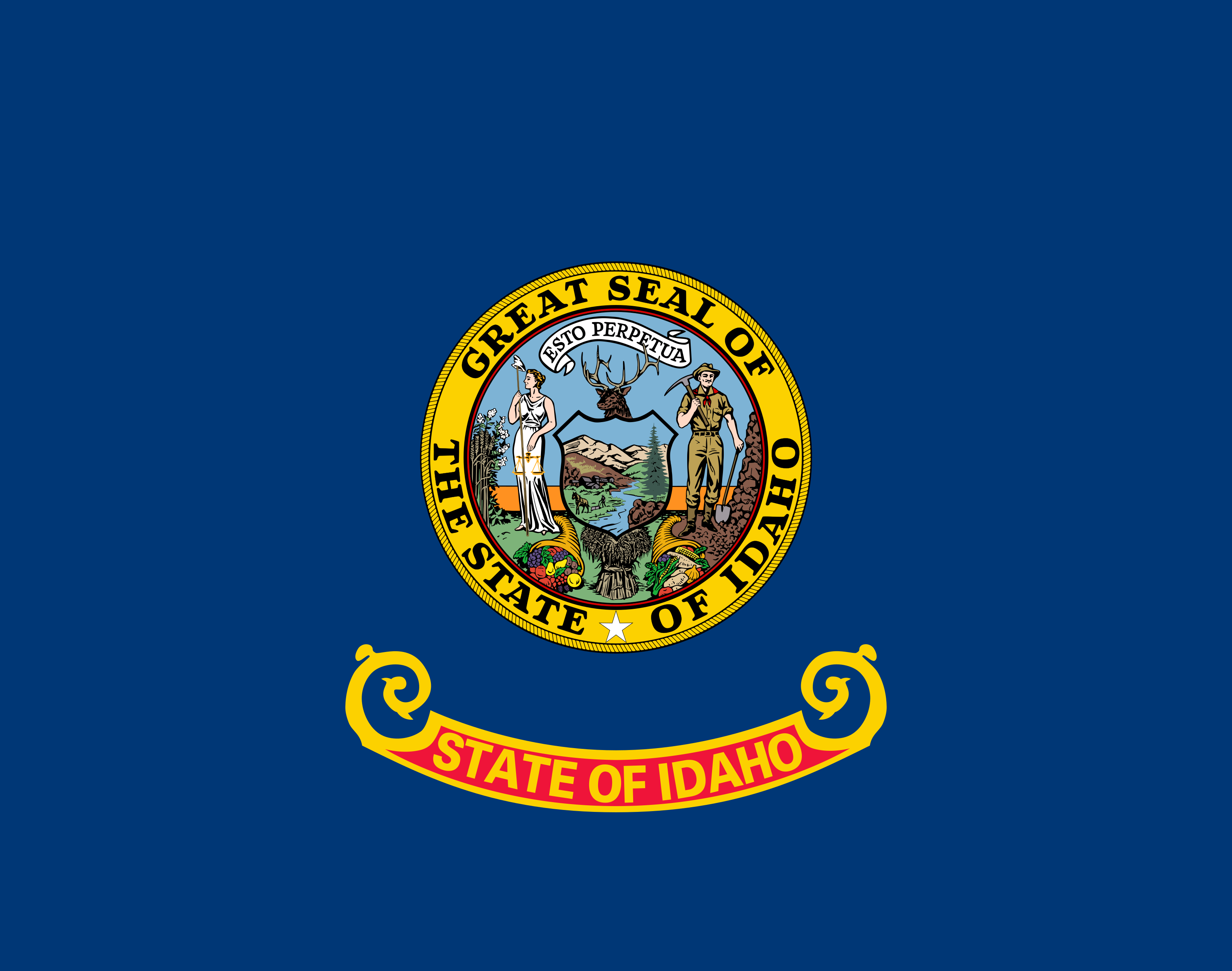
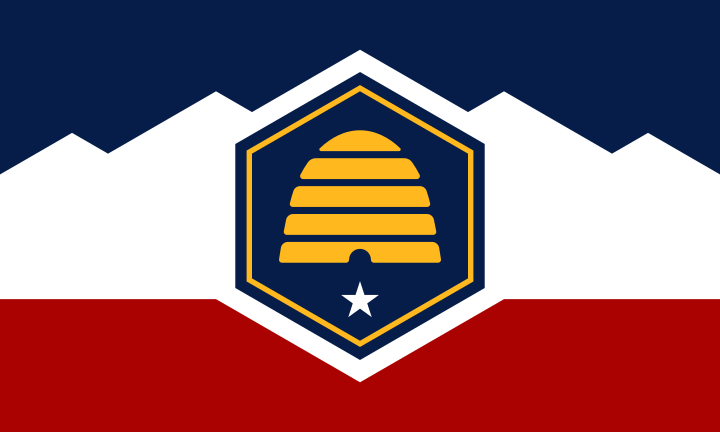
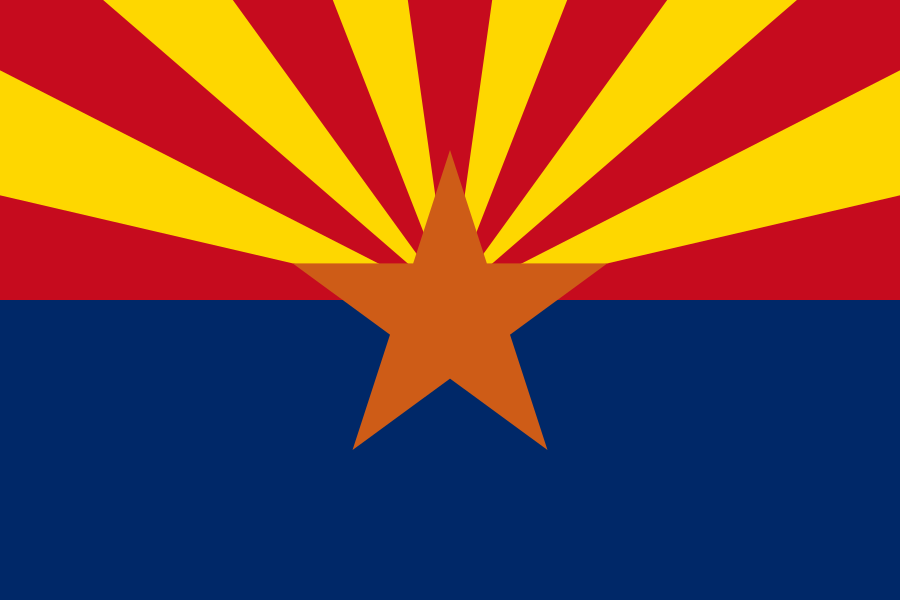
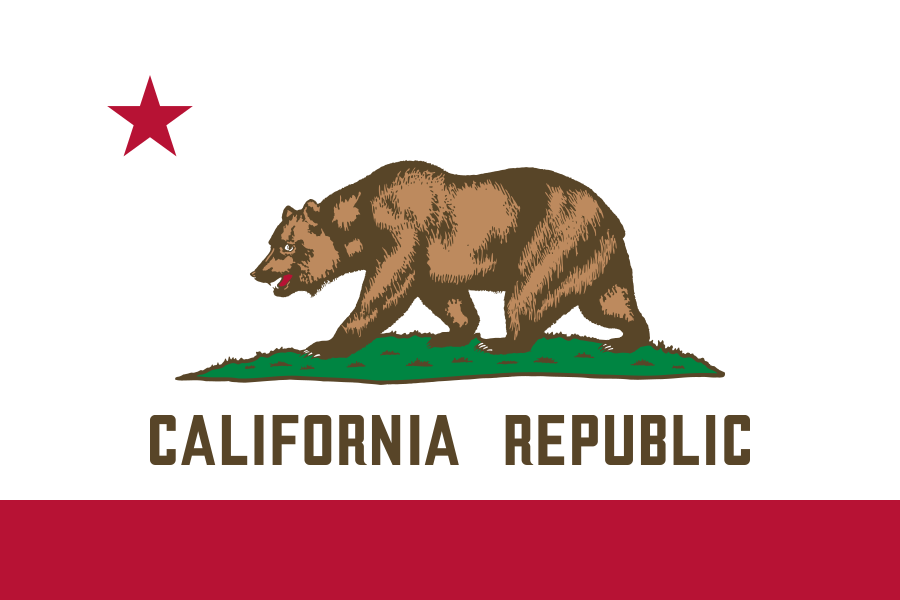
Geographically, it shares borders with Oregon, Idaho, Utah, Arizona, and California, forming a closely connected regional network.
Historical Significance
Nevada officially joined the Union on October 31, 1864 — Halloween — as the 36th state, rushed to statehood during the Civil War for its strategic silver reserves. The massive Comstock Lode silver boom of 1859 transformed the territory overnight, drawing tens of thousands of prospectors and funding the Union cause. Later, the construction of Hoover Dam in the 1930s and the legalization of gambling in 1931 set the stage for Las Vegas to rise from desert sand into the world's most glamorous entertainment city.
Famous Natives
Top Cities & Hubs
Las Vegas
Population: ~650,000The world's entertainment capital — a stunning city of neon and spectacle in the Mojave Desert that hosts over 40 million visitors annually and generates the nation's largest concentration of hotel rooms, with more than 150,000 rooms in the metro area alone.
Henderson
Population: ~330,000The state's second-largest city and consistently ranked among the safest and best places to live in the U.S., a master-planned community with a thriving business and healthcare sector adjoining the Las Vegas metro.
Reno
Population: ~270,000The "Biggest Little City in the World," transforming from a gaming town into a booming tech hub, home to Tesla's Gigafactory and Apple's massive data centers, plus a thriving University of Nevada campus driving innovation.
North Las Vegas
Population: ~275,000A rapidly growing industrial and logistics powerhouse in the Las Vegas Valley, benefiting from Nevada's tax advantages to attract major manufacturing, warehousing, and distribution operations.
Carson City
Population: ~58,000The compact and historic state capital nestled in the Eagle Valley, featuring the landmark Nevada State Capitol and serving as a gateway to Lake Tahoe's spectacular recreational paradise just 30 miles west.
How Nevada Ranks
Compared to all 50 states — bar shows relative standing (#1 = full bar)
Neighbors
Key Landmarks & Economy
Did You Know?
- Nevada is the driest state in the nation, averaging only about 9.5 inches of rain per year — and roughly 86% of its land is owned by the federal government, the highest proportion of any state.
- Las Vegas has more hotel rooms than any other city on Earth, with over 150,000 hotel and motel rooms in the metro area — more than entire countries like Iceland or Luxembourg.
- Nevada is the largest gold-producing state in the U.S. and the fourth-largest in the world, producing roughly 75% of all American gold output — far surpassing its famous silver-mining heritage in modern value.
Additional Information
89001 (Alamo) → 89883 (Wells)
~127 ZIP codes statewide
702 (Las Vegas metro area) · 775 (rest of Nevada incl. Reno & Carson City)
Demographics
Population Growth
You might also like
🧠 Nevada Trivia
5 questions — how well do you know the Silver State?
What is Nevada's official state nickname?
In what year was Nevada admitted to the Union?
Which tennis champion was born in Las Vegas, Nevada?
What is the capital city of Nevada?
Nevada leads the U.S. in the production of which precious metal?