South Dakota
The Mount Rushmore State
Quick Stats
Map
Seal & Motto
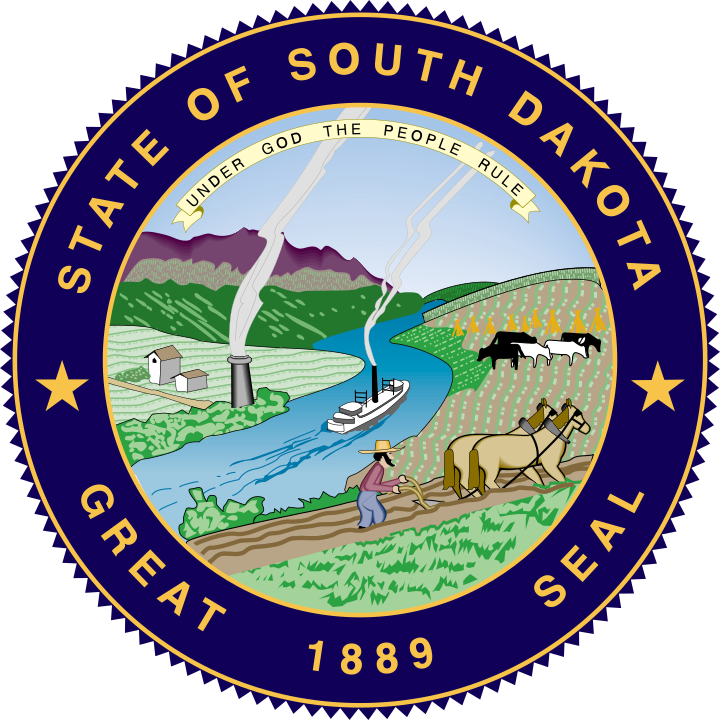
"Under God, the People Rule"
Adopted in 1889 upon statehood, this motto places popular sovereignty within a framework of faith — a declaration that democratic power flows from the people but is grounded in a higher moral order. It reflected the values of the settlers and the Lakota peoples who shaped a vast Great Plains landscape where self-governance and conviction were inseparable.
Flag & Its Meaning
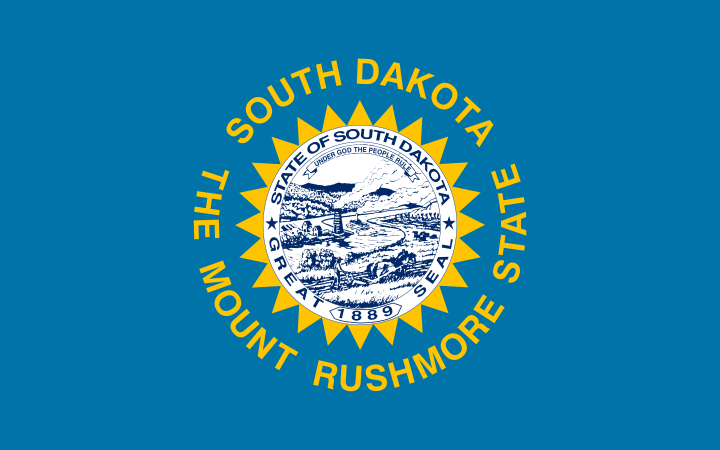
South Dakota's flag features a cerulean blue field centered on the state seal within a golden sunburst. "South Dakota" arcs above and "The Mount Rushmore State" curves below — an inscription added in 1992, making it one of few state flags to reference a specific landmark by name.
- Blue Field — Cerulean blue represents loyalty, truth, and the vast open skies that define South Dakota's Great Plains landscape from the Missouri River to the Black Hills.
- Golden Sunburst — The radiating sun encircling the state seal symbolizes the open prairie and abundant sunshine that earned South Dakota its former nickname — "The Sunshine State."
- State Seal — Depicts a farmer, cattle, smelting furnaces, a steamboat on the Missouri River, and the Black Hills — representing agriculture, ranching, industry, and the state's defining landscape.
- "Mount Rushmore State" — Added in 1992, this inscription permanently links the flag to the iconic Black Hills sculpture of Washington, Jefferson, Roosevelt, and Lincoln.
State Symbols
Overview
South Dakota, the "Mount Rushmore State," is a land of dramatic contrasts. The flat golden prairies of the east give way to the ancient granite peaks of the Black Hills, where four presidents gaze from a cliff face and a Lakota warrior is being carved into a mountain. Add the Badlands' otherworldly spires, vast bison herds, and a no-income-tax business climate, and South Dakota punches far above its population in both legend and livability.
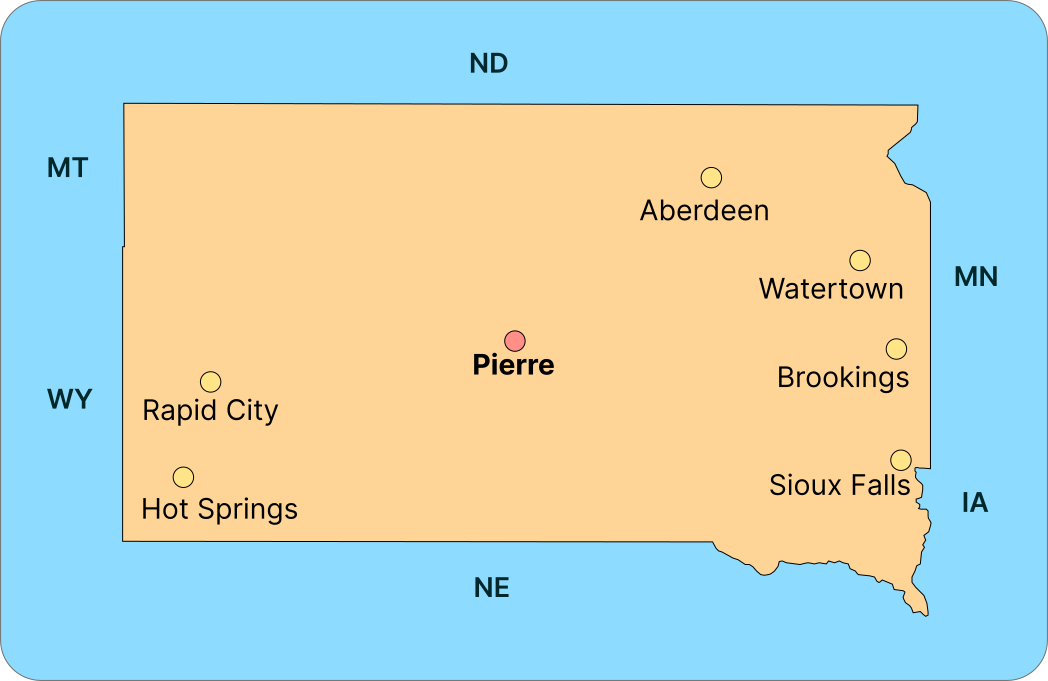
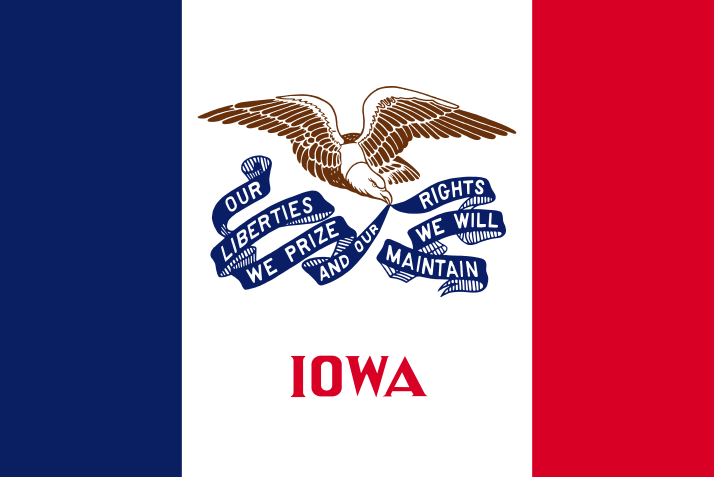
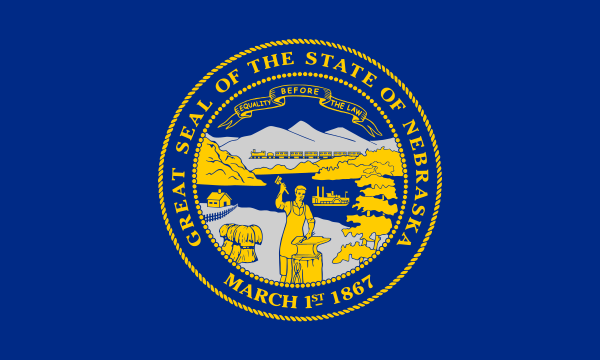
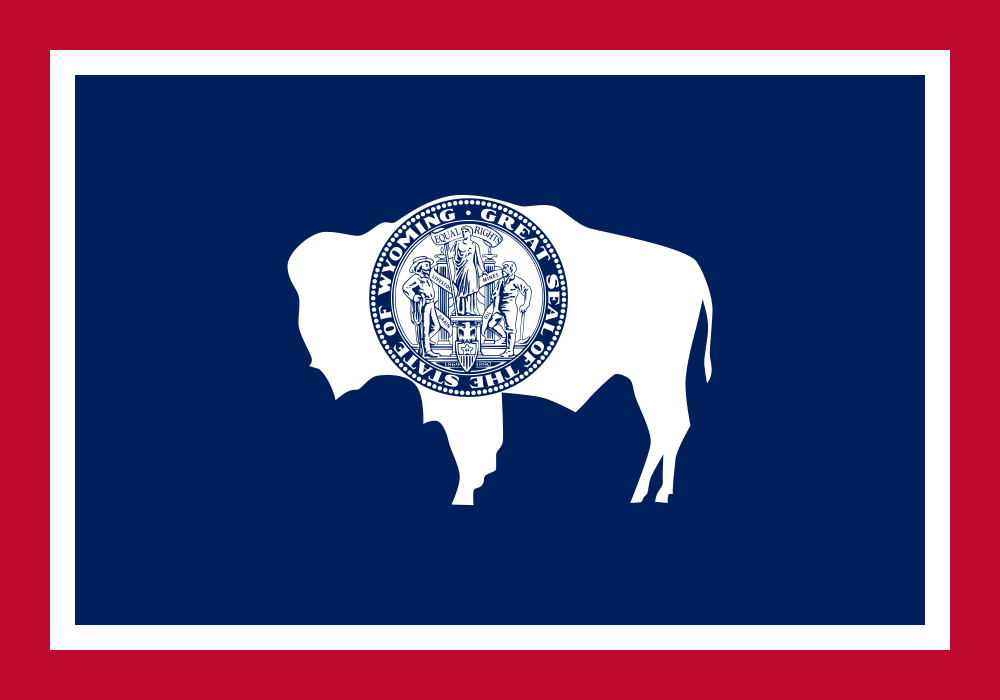
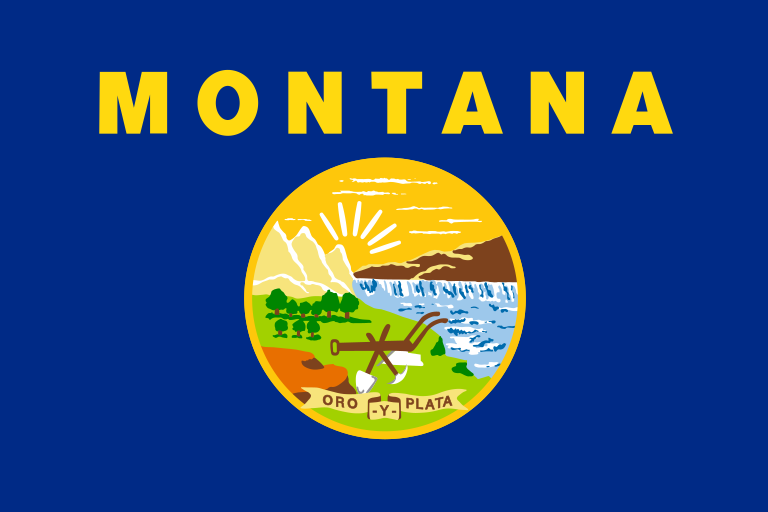
Geographically, it shares borders with ND, MN, IA, NE, WY, and MT, forming a closely connected regional network.
Historical Significance
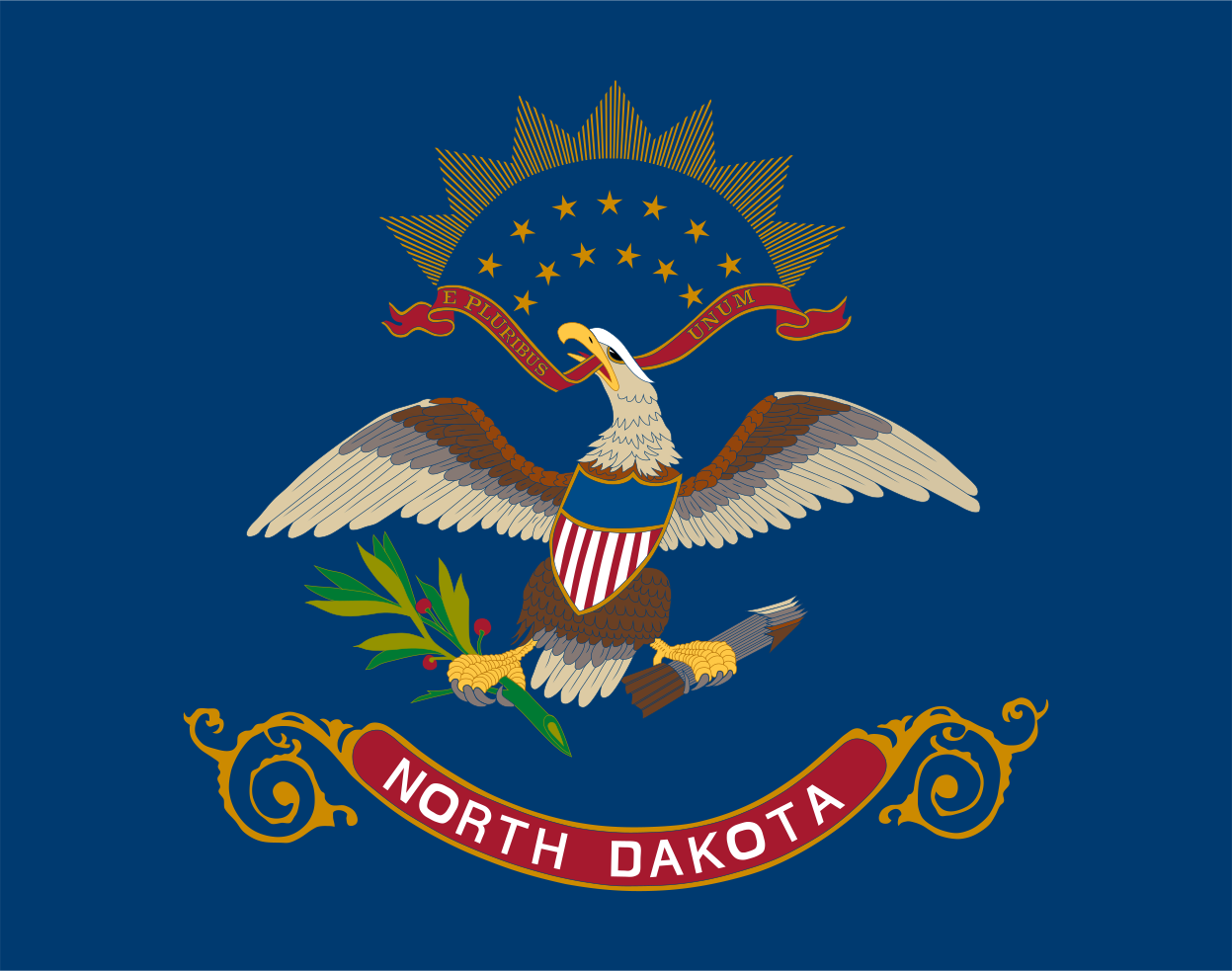
South Dakota joined the Union on November 2, 1889 as the 40th state — admitted the same day as North Dakota. Its history is inseparable from the Great Sioux Nation: the 1876 Black Hills Gold Rush violated the Fort Laramie Treaty, the 1890 Wounded Knee Massacre was the deadliest confrontation of the Indian Wars, and Mount Rushmore — completed in 1941 — transformed the sacred Black Hills into an enduring national symbol.
Famous Natives
Top Cities & Hubs
Sioux Falls
Population: ~195kThe state's largest and fastest-growing city, a thriving financial and healthcare hub anchored by major banking operations and quartzite waterfalls in Falls Park.
Rapid City
Population: ~75k"Gateway to the Black Hills" and hub for Mount Rushmore, Badlands, and Crazy Horse — known as the "City of Presidents" for its downtown presidential statues.
Aberdeen
Population: ~28kThe commercial and healthcare hub of northeastern South Dakota, home to Northern State University and a regional center for agriculture and logistics.
Brookings
Population: ~24kCollege town anchored by South Dakota State University, a growing center for agricultural research and sustainable energy development.
Pierre
Population: ~14kThe state capital — one of the least-populous capitals in the nation — a small riverside city on the Missouri River with a rich governmental history.
How South Dakota Ranks

Key Landmarks & Economy
Did You Know?
- The Black Hills granite core is over 1.8 billion years old — among the oldest geological formations in North America, predating the Rocky Mountains by hundreds of millions of years.
- The Corn Palace in Mitchell is the world's only corn palace, re-decorated annually with murals made entirely from corn and other grains — a tradition running continuously since 1892.
- South Dakota has no state income tax and became home to major credit-card banking operations after 1981 legislation eliminated interest-rate caps, attracting Citibank and others.
Additional Information
Demographics
Population Growth
You might also like
Test Your South Dakota Knowledge
5 questions about the Mount Rushmore State
What is South Dakota's official state nickname?
What is the capital city of South Dakota?
South Dakota was the ___ state to join the Union?
In what year was Mount Rushmore completed?
Which Lakota leader is being carved at the Crazy Horse Memorial?